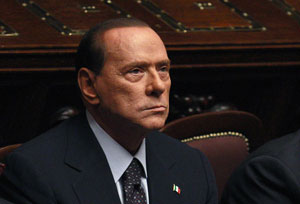
Italian prime minister Silvio Berlusconi announced his resignation Tuesday after Italy’s ruling coalition lost its majority in the lower house. Although parliament voted to pass a key austerity budget bill demanded by the European Union, the government suffered a series of defections which made Berlusconi’s long-term position untenable. As the London Daily Telegraph reported: More than half of the members of the Italian lower house refused to take part in the vote, laying bare Mr Berlusconi’s lack of support in parliament as financial pressure from the eurozone debt crisis continued …
Tony Blair’s interview in yesterday’s Times deserves to be widely read on both sides of the Atlantic. Why? Because it shows that the Eurofederalists’ delusions of grandeur are firmly alive and remain a huge threat not only to British national sovereignty but the future of the transatlantic alliance, especially the Special Relationship. It is also a further demonstration of just how far removed Tony Blair is from political reality and public opinion in the UK, but that’s never stopped him before. Blair has always been a European idealist at heart, …
Anyone who picks up the U.S. edition of former British Prime Minister Tony Blair’s brand new political autobiography, A Journey: My Political Life, will understand why Americans came to admire and trust Blair as a leader and an ally during the tough early years of the war in Iraq. It is also clear why Blair became so controversial at home, and this is not just because he staunchly supported a military engagement that came to be unpopular with many Britons. While some of Blair’s countrymen have ambivalent views about the …
Not so quietly, a new conventional wisdom has taken hold in Britain: defense spending must be cut. Last month, the Economist, in writing about “the end of the New Labour orthodoxy on public spending” – the orthodoxy being that the public sector “should consume an ever-increasing share of national wealth” – stated in passing that only the Liberal Democrats had grasped the need to axe major programs, like Britain’s Trident nuclear deterrent. This month, David Halpern, former Chief Analyst in Tony Blair’s Strategy Unit, writes in Prospect magazine that, instead …
Opining in today’s Washington Post, former Prime Minister Tony Blair writes: Unless the United States radically reduces its greenhouse gas emissions, along with other major emitters, the damage to the climate will be irreversible. … Over the past few years, the debate on climate change has shifted profoundly. … Clearly, many countries and companies are realizing that, far from being a detriment to their economies, acting early to cut emissions can increase productivity and give them a competitive edge. Mr. Blair may want to devote less time to convincing Americans …