The Obama Administration’s decision to waive provisions of the Jones Act last month when releasing oil from the Strategic Petroleum Reserve is typical of this Administration’s disregard for the principle of equal protection under the law when it becomes too inconvenient. For example, we’ve seen well over 1,000 waivers of the new health care law for those with the influence to get them. The Jones Act waiver was even more transparently political, as the only real crisis at the time of the oil release was a crisis in President Obama’s …
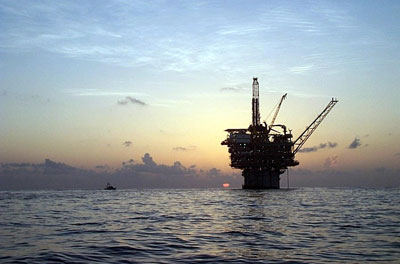
Americans are paying more for gasoline today than they were six weeks ago when President Obama released 30 million barrels of oil from the Strategic Petroleum Reserve. In the Gulf of Mexico, meanwhile, 10 drilling rigs — more than one-third of the fleet — have left on Obama’s watch. This incomprehensible energy policy is not only costing Americans more money at the pump. Bureaucratic delays in Washington are also stunting job growth and adding to the budget deficit. As the Obama Administration pivots to a new jobs agenda — at …
U.S. employers added only 18,000 jobs last month — a remarkably low figure that contributed to the increase in unemployment to 9.2 percent. That’s the bad news. Fortunately for American workers, the future is bright, but only if regulators in Washington, D.C., get out of the way. A new study from the respected IHS Cambridge Energy Research Associates and IHS Global Insight reveals that the offshore oil and gas industry on its own could produce more jobs per month next year than the 18,000 that were created by all U.S. …
Releasing 30 million barrels of petroleum from strategic reserves is not an energy policy, and it is not an especially useful response to either short-run or long-run pressures on gasoline prices. Because the release is scheduled to stop in 30 days, market adjustments will partially offset the release’s impact in the short run. And in the long run, there is no additional output. In fact, the current released oil will need to be replaced in the future. Most of OPEC is producing at capacity, so the notion that it is …
America’s trucking industry is on pace to pay a whopping $138.7 billion for fuel in 2011 — an increase of $37.2 billion over last year due to higher energy prices. That’s a lot of money for gas. And unfortunately for consumers, they’re likely to pick up the tab. A new study from the Consumer Energy Alliance blames the lack of a national energy policy for America’s economic woes. Higher prices are costing jobs and putting a strain on families struggling to make ends meet. Higher costs for the transportation sector …
When it comes to making bad energy policy decisions, President Obama is a pro. Yesterday was no exception when the Obama Administration announced it would release 30 million barrels of oil from the Strategic Petroleum Reserve (SPR). This is part of an agreement with the International Energy Agency (IEA) to put a total of 60 million barrels on the market in the next 30 days. Another 27 nations will make up the other half of the oil needed. President Obama and the IEA first explained this irresponsible action by noting …
The 28 member countries of the International Energy Agency (IEA) agreed to release 60 million barrels of oil reserves—2 million barrels per day over 30 days—to offset the supply disruption as a result of the political unrest in Libya. The Obama Administration announced that 30 million of those barrels will be met by releasing supplies from our domestic Strategic Petroleum Reserve (SPR). The problem is that releasing reserves from SPR does not pass legal, rational, or economic muster. A much more prudent move for the Administration would be to open …
In response to OPEC’s inability to come to agreement on boosting oil production, the White House indicated that it would not shy away from tapping into the Strategic Petroleum Reserve (SPR), which holds 700 million barrels of unrefined petroleum reserves in underground salt caverns, in order to smooth over oil supply disruptions originating from the Libyan conflict. A temporary oil price increase, however, is not a valid reason to tap into the U.S. emergency oil supply, which is, after all, a national security asset. Although President Obama’s approval ratings have …
As gas prices hit $4 per gallon, White House spokesman Jay Carney assured Americans on Monday that the administration is well aware of the toll high fuel costs are taking on American families. So what’s President Obama’s solution to America’s pain? According to White House chief of staff Bill Daley, the administration may tap into the nation’s oil safety net – the Strategic Petroleum Reserve (SPR) – in order to bring down the cost of fuel. Big mistake. While most folks want to pay less at the pump, dipping into …
As Americans continue to feel the effects of President Obama’s anti-oil agenda at the pump, defensive liberals are circling back to a familiar line of counter-attack: blame Bush. The media vacuum on gas prices has made this line of attack all the more promising with very little national coverage being given to the president’s destructive domestic drilling agenda. Unfortunately it misses an obvious point. President George W. Bush was mostly attacked for wanting to drill too much (or being “cozy” with the oil industry), while President Obama’s policies are rooted …