• The Heritage Network
    • Resize:
    • A
    • A
    • A
  • Donate
  • space

    Guest Blog: China’s Space Program Threatens U.S. National Security

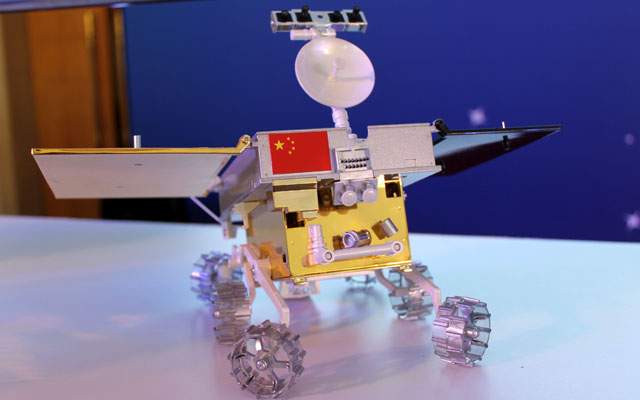
    On November 2nd, the China National Space Administration (CNSA) completed a critical milestone in its young, yet ambitious, space program. China’s unmanned Shenzhou 8, which launched on October 31, successfully completed an automated rendezvous and docking with their prototype space station module, Tiangong 1. This docking exercise is a critical development in China’s quest to launch and operate its own manned space station in Low-Earth Orbit. As China moves ahead with enhancing their space capabilities, the U.S. shuttle program has ended with no successor in place and an unclear future. … More

    Senate Committee to BBG: Hands off China Broadcasting

    Of the countries that present the greatest foreign policy challenges to the U.S. and will do so in the decades to come, China has to be close to the top of the list, if not number one. Every day brings a new gantlet thrown down by China to American leadership. Thursday, it was of China’s launch of a rocket containing elements of its new space laboratory, images that will be exploited to their full potential in the service of Chinese public diplomacy. This is why the decision of the Broadcasting … More

    Morning Bell: China Threatening U.S. Space Superiority

    Yesterday in New York City, NASA’s last space shuttle astronauts visited a World War II aircraft carrier-turned-museum docked on the west side of Manhattan. The carrier is one of four museums where retired NASA shuttles will go to rest now that the historic shuttle program has ended. But as NASA sends its shuttles to museums, China is making great strides in its space program—with preparations under way for the launch of a Chinese spacelab in the next few weeks. These advances are beginning to threaten U.S. space superiority and America’s ability to support … More

    Lost in Space: The Administration’s Rush for Sino–U.S. Space Cooperation

    The Obama Administration appears absolutely intent on engaging the PRC in space cooperation. How else to explain the claim by White House Office of Science and Technology Policy Director John Holdren that the congressional restriction banning U.S.–Chinese space cooperation under just about any circumstances was not, in fact, a ban? According to Holdren, the White House has concluded that the provision doesn’t extend to “prohibiting interactions that are part of the president’s constitutional authority to conduct negotiations.” That includes, he said, a bilateral agreement on scientific cooperation between the two … More

    Dragon Week: Orbiting Dragons

    At the 2009 Sino-American summit, President Obama committed the US to dispatching the head of NASA to China, in return for a reciprocal visit by his “appropriate Chinese counterpart,” i.e., a player to be named later. A year later, NASA Administrator Bolden has visited China (although it remains unclear to what end), yet there is no sign that an “appropriate Chinese counterpart” has even been designated. This should be a warning sign, since China’s presence in space has been steadily improving. In 2010, China launched a record 15 satellites, the … More

    Chinese Women in Space

    Even as the US continues to debate how it will sustain a manned presence in space, China made yet another major announcement about  its manned space program. In an announcement from the Chinese Ministry of Defense, it was declared  that the newest class of Chinese astronauts included two women. Unlike their male counterparts, these are drawn from the ranks of China’s transport aircraft pilots (presumably because the People’s Liberation Army Air Force [PLAAF] has no female fighter pilots).

    New China Space Milestone an Opening for the U.S.

    Even as NASA and the rest of the US government continue to debate about how it will sustain a manned presence in space, the Chinese government has now announced that the first module of the Tiangong-1 (Heavenly Palace) space lab will be launched next year. Expected to weigh about 8.5 tonnes, the module will provide a target for Chinese spacecraft to practice docking maneuvers — an essential part of both a long-term presence in space and for any mission to the Moon or beyond. Yet, the announcement also constitutes a … More

    Space Program Deserves Full Funding

    Like cyberspace, space remains a critical enabler of America’s military power. Whether for navigating Navy destroyers through narrow straits, or guiding smart bombs to their targets, the military relies heavily on a strong presence in space. For this reason, potential adversaries, according to Secretary Gates, are investing “in weapons geared to neutralize our advantages.” This is true of China’s military modernization, which the Chairman of the Joint Chiefs has said is “very much focused” on the United States military.

    Congress Must Save Vital ‘Responsive Space’ Program

    A recent article I wrote for Armed Forces Journal discusses the Pentagon’s efforts to maintain space dominance amid the challenges of emerging peer competitors. The Pentagon’s Operationally Responsive Space (ORS) office stands at the forefront of an effort to revolutionize the way the U.S. builds and deploys satellites. However, only one year after the ORS office was stood up, defense officials are threatening to slash the budget by $297 million dollars between fiscal 2011 and fiscal 2014, essentially grinding the program to a halt. With the unprecedented modernization of China’s … More