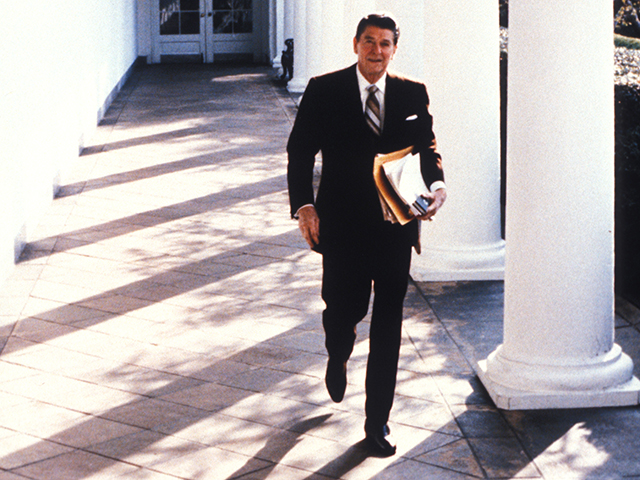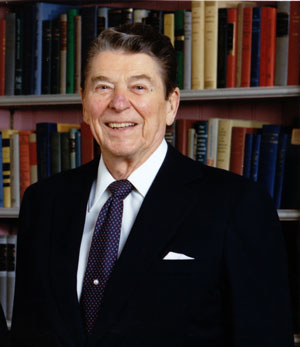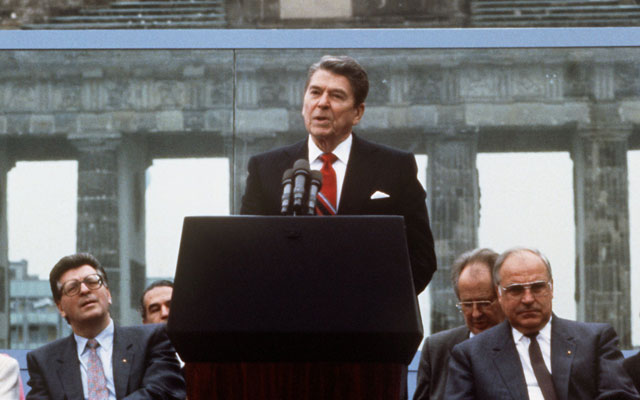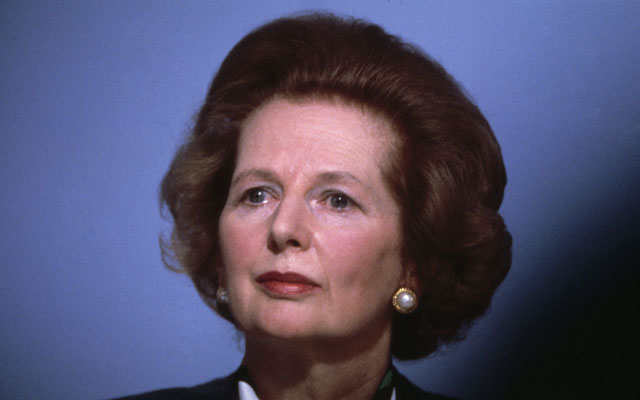
In his two terms in office, President Ronald Reagan gave America a powerful transfusion of his own optimism and hope. He rekindled a sense of the possible, rescuing America from defeatism and restoring our confidence and pride in this great nation. That transformation of America was possible chiefly because of Reagan’s unshakable faith in the power of ideas. Reflecting his strong conviction in freedom, Reagan pointed out in his address to students at Moscow State University in May 1988: Freedom is the right to question and change the established way …
In 1987, the United States and the Soviet Union negotiated the Intermediate-Range Nuclear Forces Treaty (INF), which was designed to eliminate their nations’ respective intermediate range, ground-based ballistic and cruise missiles with ranges between 500 and 5,500 kilometers. In discussing INF negotiations with the Soviet Union, President Ronald Reagan famously summoned upon one of his guiding principles: Trust but verify. Thirty-five years later, the Obama Administration has adopted an entirely different tack in dealing with ongoing missile defense negotiations with Russia. Rather than negotiate from a position of informed strength, …
Throughout the world, countless violations of basic human rights occur every day, but, as Representative Frank Wolf (R–VA) quoted Simon and Garfunkel, “A man hears what he wants to hear and disregards the rest.” On January 12, The Heritage Foundation hosted Wolf, a champion of human and religious rights around the world, for the presentation of his book, Prisoner of Conscience: One Man’s Crusade for Global Human and Religious Rights. Leaders in the Administration, media, and society at large appear to have lost passion for standing for the Tibetans, supporting …
Unemployment is up, inflation has risen, housing prices have stalled, and bankruptcies are at a record high. The price of oil is through the roof, we are on dangerous territory with Iran, and the great communist nation on the other side of the world is on our heels. Meanwhile, the President of the United States still doesn’t understand why Americans will not simply pull themselves out of their funk. Welcome to the year 1980. The resemblance between 1980 and 2012 doesn’t stop at economic conditions and foreign troubles. The year …
President Barack Obama began the new year on a controversial footing by signing the highly disputed National Defense Authorization Act of 2012 (NDAA 2012) into law. Defense authorization bills are traditionally passed by Congress and signed with little controversy by the sitting President. But the NDAA 2012 has been the focus of particular rancor from often unlikely parties, and the signing statement written by President Obama, which was included with the bill as an informal addendum, is particularly troubling to those who value the integrity of our national defense strategy. …
Rhetoric and material strength go hand-in-hand to form the core of any coherent foreign policy. Drawing on his vast wealth of experience as a career Foreign Service officer under President Ronald Reagan, Charles Hill recently discussed the importance of having a comprehensive grand strategy. According to Hill, “rhetoric is important, but it has to be backed up.” This is an area where America’s foreign policy currently falls short. Using Reagan’s Soviet policy as an example, Hill highlighted the importance of backing up any confrontational rhetoric with military, economic, and diplomatic …
You camped out by Best Buy for Black Friday, perused the neighborhood shops on Small Business Saturday, crashed the computer on Cyber Monday, but still didn’t get a gift for your father-in-law, stocking stuffers (that aren’t socks), or a good book to survive that four-hour layover in Atlanta. You need the First Principles gift list. We have collected the top 10 books from our list: Religious Liberty in the American Republic by Gerard V. Bradley: Whether your celebrations involve a menorah, a manger scene, or performing feats of strength for …
The late U.S. Senator Malcolm Wallop (R–WY), who was the first Chung Ju-Yung Fellow for Policy Studies at The Heritage Foundation, will be missed by many. His tireless contributions to this country in foreign and defense affairs are significant and will long be remembered. Senator Wallop supported a strong national defense and the 1976 “Team B Strategic Objectives Panel,” which laid the intellectual foundation for the Reagan arms buildup. In the 1970s, Senator Wallop was at the forefront of the effort to enact legislation to develop defensive systems to protect …
Ratification of the 1982 U.N. Convention on the Law of the Sea (UNCLOS) would jeopardize American security, rule of law, and prosperity, Sen. Mike Lee (R-UT) said yesterday at Heritage. The junior senator from Utah — who is a member of the Senate Committee on Foreign Relations — addressed a packed auditorium on how specific articles of the UNCLOS are at odds with the U.S. Constitution and way of life. The treaty — adopted at the United Nations in 1982 — currently binds more than 160 countries, but not the …
Ronald Reagan communicated timeless truths about America— truths about freedom, limited government, hard work and opportunity—and these truths guided him while he was in office. A thinker and avid reader of history, Reagan was guided by the first principles of the American founding, especially the idea of ordered liberty in our nation’s charter—our enduring Constitution. In the opening paragraphs of his first inaugural address in 1981—much of which he personally drafted—President Reagan echoed the preamble of the Constitution, calling on “We the people” to do whatever needs to be done …