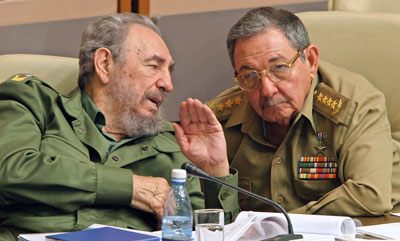
It is the sad plight of the proud Cuban people to live under the yoke of the Cuban Communist regime. May 20, 2010 marks the 108th year of Cuba’s independence. This year is also the 51st year of the Castro dictatorship. The people of Cuban – vibrant, ethnically-diverse and enterprising – are shackled hand and foot by a system conceived in the 19th century utopian musings of Marx but actually forged and perfected by the great totalitarians of the 20th century. In History’s light, Havana’s aging dictators – Fidel and …
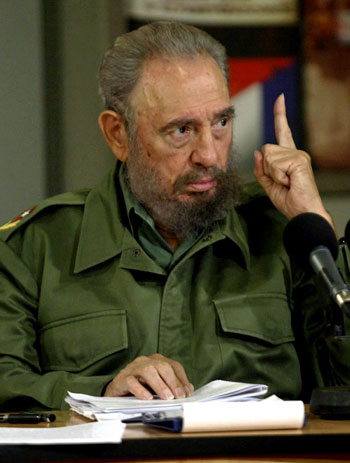
Cuban leader Raul Castro is a figure right out of the world of George Orwell’s political epic 1984. In that novel, Big Brother declared, through the propaganda subjected to the citizens of the future society of Oceania, that “freedom was slavery” and “war is peace.” Castro has engaged in Orwellian rhetoric in his response to mounting criticism over the government’s treatment of dissidents who have gone on hunger strikes to protest their imprisonment. He denied that there was merit to the criticisms leveled regarding the treatment of political prisoners or …
Leftist love for the Marxist Cuban regime manifests regularly. Just this Monday in the New York Times Marc Lacey had an item titled “Dreaming of Cuban Profits in Post-Embargo World.” The article was a bit odd, most notably for the unreal caption of a photo of tourists driving a 1952 Cadillac along El Malecón, describing the scene as “a pleasure that few Americans have experienced in decades.” The caption had a double meaning, as not only have Americans not visited El Malecón since the Revolution, but Americans haven’t experienced the …
As noted before at the Foundry, the free expression that we take for granted in the United States is unknown to those living under the Castro regime. In a chilling reminder of the cold authoritarian repression that still exists only 90 miles from the American mainland, Orlando Zapata Tamayo, a Cuban political prisoner, died Tuesday. His death came after he had initiated an 80-day hunger strike aimed at improving his conditions. Raul Castro made a rare motion of “lamenting” over the death of Zapata. In a depressingly predictable move, however, …
The U.S. Committee on Foreign Affairs held a hearing last week on lifting the ban on travel to Cuba, revealing the high discrepancy among congressional members over whether or not restricting Americans from traveling to Cuba will ultimately influence democratic change and enhance human rights under the Castro regime. Many representatives argued that this policy has failed at influencing democracy within the communist state and has prevented Americans from traveling where they please. Others claimed that by allowing Americans to travel to Cuba, to speak and have frequent contact between …
On April 6, Ambassador Jeffrey S. Davidow, White House Advisor for the Summit of the Americas, said very plainly: “It would be unfortunate if the principal theme of [the Summit of the Americas] turned out to be Cuba. As I’ve told you, I think there are a lot of very important issues that warrant discussion, whether it’s the economic issue, social inclusion, the environment, public safety. We would prefer, obviously, to focus on what we have been preparing for, but there is no effort on our part to try to …
This year was indeed historic for Latin America. Fidel Castro finally stepped down from power and handed the reins to his brother Raul. According to a panelist at a recent event at the Center for Strategic and International Studies, Raul, unlike his brother, is no charismatic political leader; he is a military man, a manager of bureaucracy. Does that matter? Perhaps. The panelists also made clear Fidel will most certainly not return to power due to deteriorating health, though he still does manage to “put his foot down” from time …