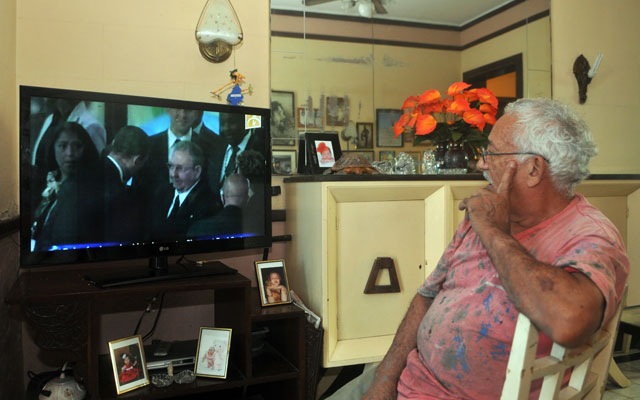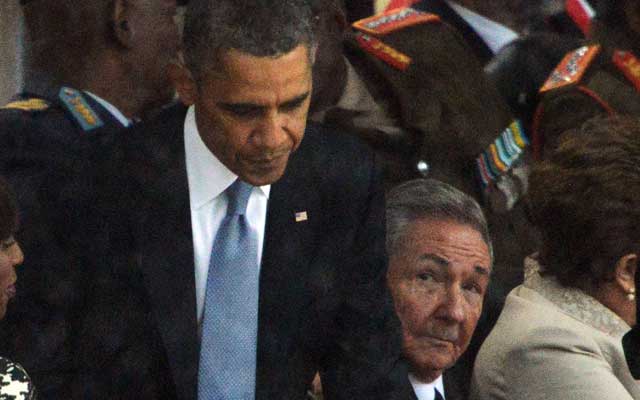
Anyone hoping to see serious changes to Cuba’s ruling system was again disappointed on January 28 when Raul Castro spoke. In a speech marking a critical conference, the Cuban leader promised change, term limits, economic reform, and a willingness to move younger party members to a more elevated status. Yet, as Raul Castro made many promises to his people during his 48-minute address, one could not help but notice the disparity between his words and the reality of Cuban life and politics. At one point, he boasted that Cuba is …
On learning of the death of Kim Jong-il, Cuban authorities immediately declared three days of official mourning. Their action underscored longstanding ties of intimacy between two of the world’s most oppressive, most anti-American regimes. The death of North Korea’s tyrant also evoked a feeling that the Cuba of Fidel Castro, age 85, and reigning leader Raul Castro, age 80, will soon be overtaken by the passage of time, ushering in fresh and similar regime uncertainties. Independent-minded Cuban blogger Yoani Sanchez sees deep parallels: “genealogy has been more determinate than ballot …
The Sixth Cuban Communist Party Congress and the Cuban people learned on April 19 that Fidel Castro is now fully retired. The Bearded One has become, so it appears, just another private citizen. Showing up wearing a blue track suit, helped to his seat by an aide, and appearing every day his 84 years of age, Fidel Castro relinquished all party and state posts for the first time in over a half a century. The four-day Party Congress was convened to accomplish two things: (1) open the doors for a …
Diplomats have often been disparaged as honest men sent abroad to lie for the good of their countries. If the plethora of disloyal, dangerous attacks launched by WikiLeaks continues and if the Obama Administration cannot stanch the bleeding, foreign officials and U.S. diplomats will soon find it just as likely that they must also lie to Washington. WikiLeaks promises to release thousands of cables from U.S. embassies in the Americas, although only a few cables appear noteworthy. They reflect the states of mind of some members of our diplomatic corps, …
The Obama Administration is apparently readying a “Fall Surprise” regarding its policy toward Cuba. The New York Times reports that the White House intends to ease restrictions on travel to Cuba and return to the “people-to-people” policies of the Clinton Administration. It will also reportedly make private assistance flows easier. Claimed one Democratic policy mandarin, the Administration has worked up “a smarter Cuba policy.” The decision to loosen restriction comes as Cuba’s mismanaged economy is again in free fall and seeks help from any quarter. Cubans recently were informed that …
The announcement that Cuba’s communist regime intends to free 52 political prisoners over the next few months raises serious questions that require honest answers by the Cuban government and by those anxious to bestow kudos upon Cuban President Raul Castro for these cosmetic and expedient gestures of leniency. How many political prisoners? Prominent U.S. Members of Congress—Ileana Ros Lethenen (R–FL), Lincoln Diaz-Balart (R–FL), and Mario Diaz-Balart (R–FL)—warn that, by accepting claims that place the number of Cuban political prisoners at less than 200, the U.S. and the international community are …
It is the sad plight of the proud Cuban people to live under the yoke of the Cuban Communist regime. May 20, 2010 marks the 108th year of Cuba’s independence. This year is also the 51st year of the Castro dictatorship. The people of Cuban – vibrant, ethnically-diverse and enterprising – are shackled hand and foot by a system conceived in the 19th century utopian musings of Marx but actually forged and perfected by the great totalitarians of the 20th century. In History’s light, Havana’s aging dictators – Fidel and …
Cuban leader Raul Castro is a figure right out of the world of George Orwell’s political epic 1984. In that novel, Big Brother declared, through the propaganda subjected to the citizens of the future society of Oceania, that “freedom was slavery” and “war is peace.” Castro has engaged in Orwellian rhetoric in his response to mounting criticism over the government’s treatment of dissidents who have gone on hunger strikes to protest their imprisonment. He denied that there was merit to the criticisms leveled regarding the treatment of political prisoners or …
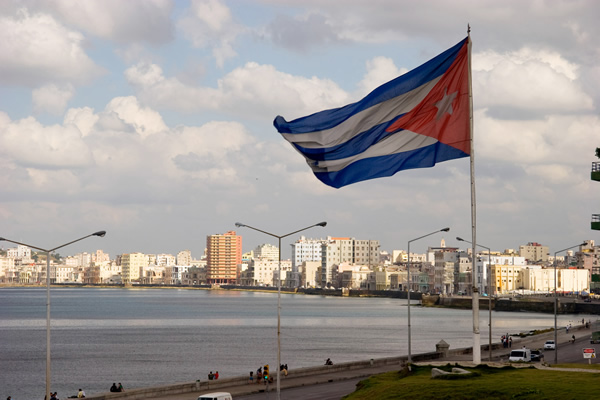
Leftist love for the Marxist Cuban regime manifests regularly. Just this Monday in the New York Times Marc Lacey had an item titled “Dreaming of Cuban Profits in Post-Embargo World.” The article was a bit odd, most notably for the unreal caption of a photo of tourists driving a 1952 Cadillac along El Malecón, describing the scene as “a pleasure that few Americans have experienced in decades.” The caption had a double meaning, as not only have Americans not visited El Malecón since the Revolution, but Americans haven’t experienced the …
As noted before at the Foundry, the free expression that we take for granted in the United States is unknown to those living under the Castro regime. In a chilling reminder of the cold authoritarian repression that still exists only 90 miles from the American mainland, Orlando Zapata Tamayo, a Cuban political prisoner, died Tuesday. His death came after he had initiated an 80-day hunger strike aimed at improving his conditions. Raul Castro made a rare motion of “lamenting” over the death of Zapata. In a depressingly predictable move, however, …