The bankruptcy of solar energy company Solyndra is making national headlines and has put President Obama’s green jobs programs under the microscope. Click here to join the chat! We are joined by Heritage’s Energy and Environment Policy Analyst Nick Loris. He is taking your questions about what can really create jobs and why it is not a good policy for the government to be picking winners and losers. Submit a question in the form below and we’ll answer as many as we can! Lunch with Heritage feat. Nick Loris
In case you missed it, make sure you listen to last week’s Heritage Libertad Radio Show. Listen in Spanish or English. The Spanish show kicks off with a discussion of new government data regarding the Hispanic community. That’s followed up with a segment on immigration. The show closes with member questions: What is American exceptionalism? How is the president paying for his newly proposed jobs plan? The English show kicks off with a segment with Congressman Farenthold (R – TX) on oil and gas exploration and the EPA. From there …
Total, Europe’s third largest oil company, announced last Friday that they have made a major gas discovery in the Caspian Sea. The discovery, made in the Absheron block off the coast of Azerbaijan, is thought to have large pockets of gas spread over a 270-square-kilometer field and holds about 350 billion cubic meters of natural gas and 45 million metric tons of gas condensate, according to SOCAR, the state oil company of Azerbaijan. It is likely that additional reserves will be discovered as the exploration of the field advances. Participants …
If the pace of Gulf oil drilling permit awards does not increase, as many as 20 drilling rigs could soon leave the Gulf, a major investment bank announced. BER Capital Investments called the current rate of permitting unsustainable in a report released Wednesday. BER’s report noted that the slow pace of permitting is not due to political factors, instead blaming policies put in place in after the spill. They have directly contributed to the current backlog of permits. “Rather than being political, the [Gulf of Mexico] permitting drag is more …
Energy research firm Wood Mackenzie released a report on Wednesday that lends weight to arguments for greater energy exploration and production in the United States. The economic effects of such a policy, the report asserts, would be uniformly positive. The report summarizes its findings thusly: Wood Mackenzie’s analysis found that U.S. policies which encourage the development of new and existing resources could, by 2030, increase domestic oil and natural gas production by over 10 million boed [barrels of oil equivalent per day], support an additional 1.4 million jobs, and raise …
Last week, oil giant ExxonMobil announced an agreement with Russia’s state oil company, Rosneft, to explore for oil in the Arctic continental shelf in the Kara Sea. America’s largest oil company is taking the place of BP (British Petroleum), whose dealings with Rosneft earlier this year collapsed. The controversial Rosneft and Exxon will be searching the Russian Arctic waters for black gold. Development of new oil fields has become possible due to the Arctic polar ice caps’ retreat and technological progress that make geological work in the High North a …
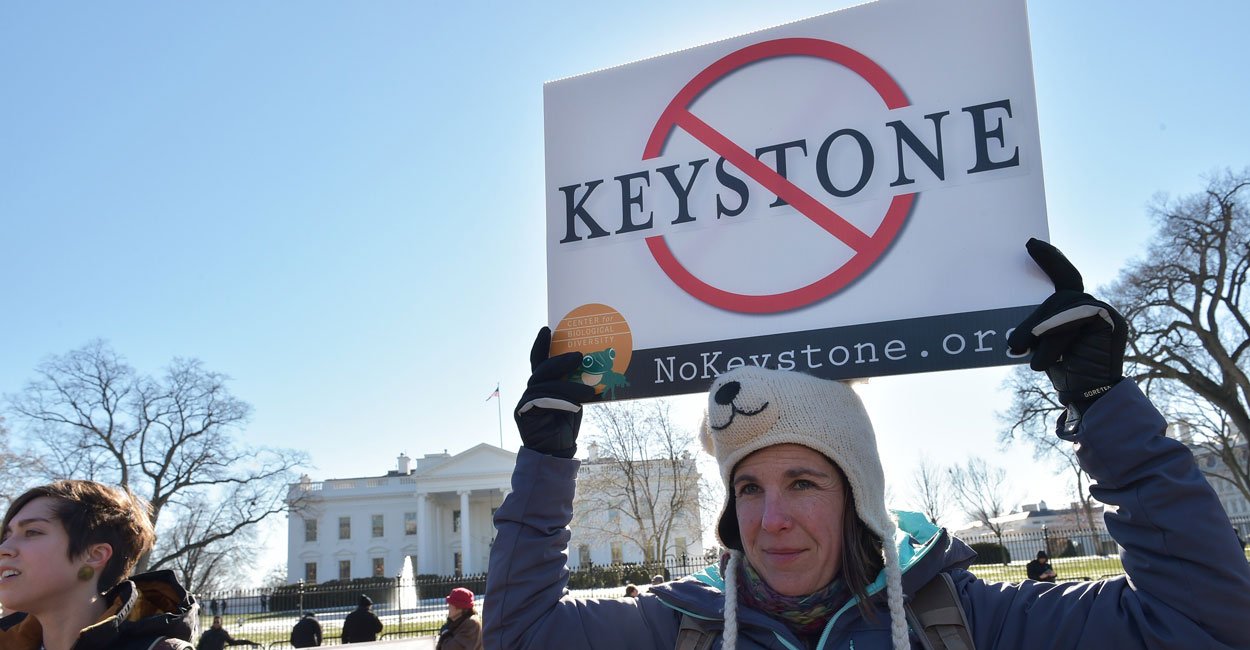
The renewable energy advocacy group Oil Change International released a report on Wednesday claiming that oil from Canadian tar sands imported to the United States through the proposed Keystone XL pipeline “would primarily be exported rather than used domestically in the U.S,” Politico reported. The report specifically and repeatedly cited Texas oil company Valero as emblematic of that strategy. Valero “has locked in at least 20 percent of the pipeline’s capacity,” the report claims. It insists that the company will use its new supplies of Canadian crude to bolster its …
It seems that Canada, America’s friendly neighbor to the north (and beloved by the left for its universal health care system) has a new enemy to the south—environmental activists. Its crime? Wanting to use its natural resources. In the Natural Resource Defense Council’s (NRDC) “onearth” blog, Andrew Nikiforuk lambastes Canada for a Calgary-based company’s attempt to build the Keystone XL pipeline to carry tar sands oil (“bitumen,” a type of petroleum) from Alberta to the Gulf of Mexico—bringing upwards of a million barrels of oil per day to refineries in …
Over the years our federal government has implemented a number of bad policies to reduce dependence on foreign oil. The latest flavor-of-the-month policy is the New Alternative Transportation to Give Americans Solutions (NAT GAS) Act, which would give targeted tax credits to produce natural gas vehicles and heavy-duty trucks. The problem with these plans is that the government picks winners and losers in the marketplace, wastes taxpayer dollars, diverts resources away from more productive use, and does little to reduce dependence on foreign oil. As Heritage’s David Kreutzer points …
The United States lacks effective energy policy responses in the event of a major oil crisis. This was the conclusion reached at a recent simulation by Securing America’s Future Energy. Little surprise here: We arrived at the same conclusion in three energy simulation exercises conducted at The Heritage Foundation in 2007, 2008, and 2010. These exercises, in which top current and former government officials, diplomats, and experts participated, demonstrated that there are significant security and diplomatic vulnerabilities to terrorist attacks. The dangers the Heritage energy game identified included domestic and …