• The Heritage Network
    • Resize:
    • A
    • A
    • A
  • Donate
  • oil

    Timeline: Keystone’s Three Years in Limbo

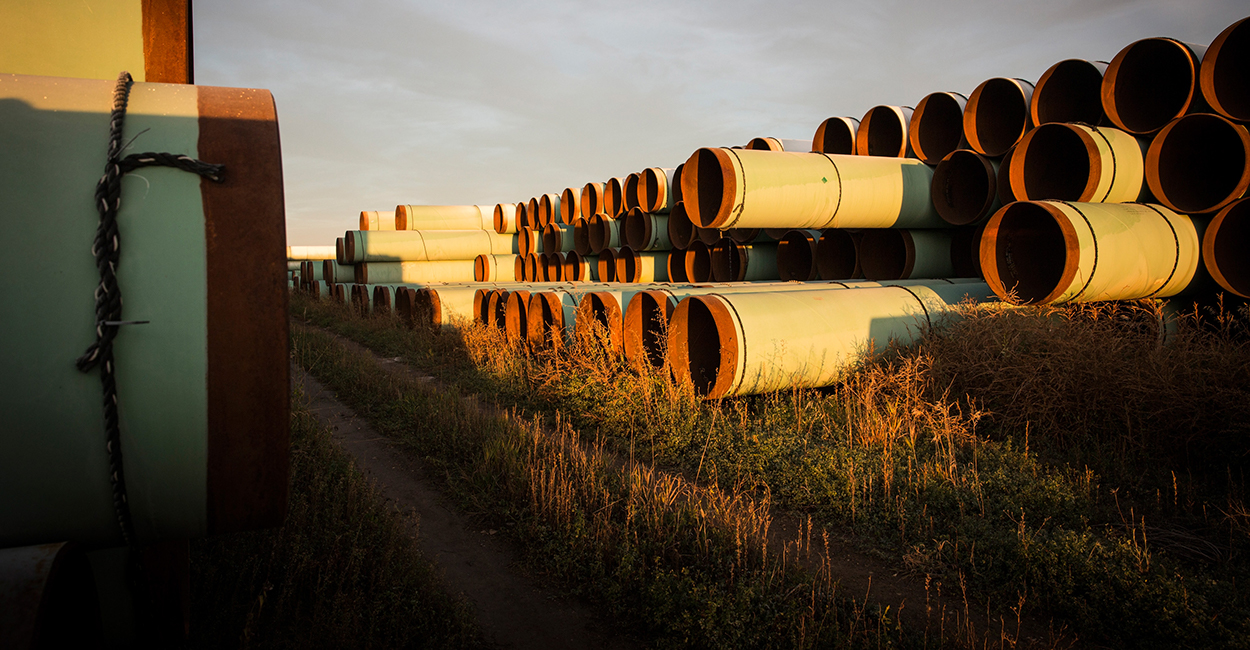
    President Obama announced he was rejecting the Keystone XL pipeline project Wednesday, blaming Republicans in Congress for forcing him to make a decision. The pipeline would have transported up to 830,000 barrels of oil per day from Alberta, Canada to Oklahoma and Texas. “This announcement is not a judgment on the merits of the pipeline, but the arbitrary nature of a deadline that prevented the State Department from gathering the information necessary to approve the project and protect the American people,” Obama said in a statement. “I’m disappointed that Republicans … More

    House Committee to Consider Bill to Advance Keystone Pipeline

    In the wake of President Obama’s decision to shut down the Keystone XL pipeline on Wednesday, the House Energy and Commerce Committee has scheduled a hearing to review legislation that would restart the project, and give oversight responsibility to an agency the bill’s proponents say is less politically motivated than the White House. Secretary of State Hillary Clinton will be invited to testify at the hearing, scheduled for Jan. 25, to discuss her department’s environmental review procedures. The hearing will focus on a bill introduced by Rep. Lee Terry (R-NE), … More

    Obama’s “Forced” Keystone Decision Rejects Jobs, Energy, and Logic

    President Obama’s politically intoned decision to reject TransCanada’s permit application to construct a 1,700-mile pipeline from Alberta, Canada, to Texas refineries sent a clear message that special interest demands are of more importance than more energy and much-needed job creation. Building the pipeline would bring over 700,000 barrels of oil per day and directly create 20,000 truly shovel-ready jobs. The Canadian Energy Research Institute estimates that current pipeline operations and the addition of the Keystone XL pipeline would create 179,000 American jobs by 2035. Since TransCanada and Nebraska politicians have … More

    Oil Prices Up, but Keystone Still in Limbo

    Americans started the week with a rude awakening — crude oil prices are up $3.80, or 3.8 percent, to $102.63 per barrel in New York today, according to the Associated Press. But despite the jump in oil prices, President Barack Obama is still sitting on his hands when it comes to exploring domestic energy resources. The AP reports on the higher oil prices: Prices climbed as soon as exchanges opened for the first day of 2012 trading. Commodity prices tend to rise at the beginning of January as investors start … More

    Delay, Baby, Delay: Obama Decision Puts Up to 200k Jobs on Hold

    First, it was 20,000 jobs the Obama Administration delayed by punting a decision to approve the Keystone XL pipeline, which would bring 700,000 barrels of oil per day from Canada into the United States. Multiply that number by 10 and you have the amount of jobs the President is putting on hold by delaying a mineral lease sale in Ohio’s Wayne National Forest for oil and gas drilling. This decision kills jobs and denies Americans access to affordable energy. The Washington Examiner reports that Wayne National Forest already has 1,300 … More

    Putin to Coordinate Oil Production with OPEC?

    Russian Prime Minister Vladimir Putin announced that his country, the world’s leading oil and gas producer, plans to work closely with the Organization of Petroleum Exporting Countries (OPEC), the oil cartel. Russia has long spoken about linking up with OPEC, but at this point the extent of its participation has been sending high-level delegations to attend OPEC meetings in Vienna as observers. “OPEC is sometimes irritated by us as we, not being a member of the organization, produce more oil, which influences international crude oil prices,” said Putin. “But we … More

    Obama Delays Keystone Pipeline: Delays Jobs and Energy, Too

    The Obama Administration announced it would delay the construction of the $7 billion Keystone XL pipeline that would bring in more than 700,000 barrels of oil per day from Alberta, Canada, to the Texas Gulf coast. What this delay really means is that President Obama is putting off an important election year decision in which two of his largest supporters—labor unions and environmentalists—are split on the issue. This tactic allows the decision to be delayed until after the 2012 elections. More importantly, this means a delay in access to easy … More

    Offshore Drilling Plan Lacks Something: More Drilling

    Yesterday, the Department of Interior released its new five-year offshore drilling plan. Unfortunately, the program is far less expansive when it comes to opening areas to access, exploration, and drilling than it should be. The plan schedules 15 possible lease sales in the 2012–2017 time horizon—10 in the central and western Gulf of Mexico, two in the central Gulf, and three off the coast of Alaska. More glaring, however, is the areas that are still off-limits. The Atlantic and Pacific coasts, areas the Obama Administration once considered opening, remain closed … More

    Small Town Bucks the Economic Trend with Energy Production

    As goes Williston, North Dakota, so goes the nation? That’s probably not a phrase you’ve heard before, but if we opened access to our domestic energy sources, Williston could be the poster child for jumpstarting economic growth in many areas of the country. In fact, the state of North Dakota has been the poster child for what can happen when we unleash free enterprise and allow states to develop and commercialize their resources. North Dakota is drilling at record pace, with oil production doubling from 2008 to 2010. MSNBC’s Brian … More

    No Drilling, No Jobs, No Money

    The Obama Administration lifted the moratorium on new permits and drilling in the Gulf of Mexico, but the same problem persists as it has for over a year now. There’s not a whole lot going on down there. ODS-Petrodata Weekly Rig Count keeps tabs on rigs under contract and rigs without contracts in different regions of the world. It also shows the utilization rate for offshore platform drilling rigs. Here are the numbers. U.S.: 44 percent, Europe/Mediterranean: 97 percent, Worldwide: 83 percent. The fleet utilization rate for the U.S. Gulf … More