News broke yesterday that three officials from the Bureau of Alcohol, Tobacco, Firearms and Explosives who were instrumental in the agency’s botched Fast and Furious operation had been promoted. That was jarring enough, given the large and seemingly growing scope of the scandal. Now we find out that Fast and Furious was an even bigger disaster than initially thought. Not only were guns from the operation discovered at the scene of Border Patrol agent Brian Terry’s murder, but an additional 57 Fast and Furious firearms were recovered at 11 different …
Drugged, raped, and sold for sex. This was the life of Maria (not her real name), a 16-year-old Mexican girl who was kidnapped by a local gang and lured into the sex trade. She was a lucky one, rescued from the criminal gang. Many others were not so lucky. Several of Maria’s friends were stolen from their homes, abused, and then sold into the U.S. or brutally killed. Annually, close to 100,000 young boys and girls from Latin America are trafficked by gangs, smugglers, and members of transnational criminal organizations. …
Customs Border Protection Agent Brian Terry was just doing his job when he was killed in an Arizona shootout in December 2010 by assault weapons sold illegally to Mexican drug cartels – guns sold under the supervision of the U.S. government. The undercover weapons trafficking, widely known now as “Operation Fast and Furious” was overseen by the Bureau of Alcohol, Tobacco, Firearms, and Explosives (ATF). The shady details surrounding the operation – along with the inadequate response by the Obama Administration – are a disservice to Terry’s memory. As …
On the night of December 15, 2010, U.S. Border Patrol Agent Brian Terry joined with other agents in an effort to catch several bandits targeting illegal immigrants in Arizona near the border. In a firefight, Agent Terry was shot and killed. When law enforcement rushed to the scene, they discovered two Romarm/CUGIR 762 assault rifles dropped by the killers. Tragically, it emerged that these guns were allowed to “walk” from the original purchaser or straw buyer to others in Operation Fast and Furious, a weapons-sting operation conducted by the Department …
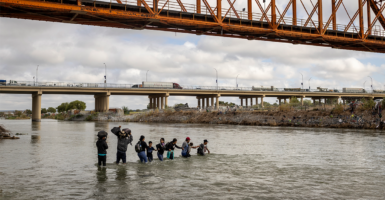
In 2009 alone, 419 bodies were discovered along the Mexican border. In the even shorter time between April and September 2010, some 11,333 illegal immigrants were kidnapped throughout Mexico. And just last year, 72 immigrants were brutally slaughtered by the Los Zetas, their bodies dumped in mass graves. Unfortunately, this violence is nothing new. It is both shocking and unacceptable, and it’s finally getting recognition. On July 6, The Washington Post produced a piece about the treacherous journey of illegal immigrants from Mexico. This timely front page spread had striking …
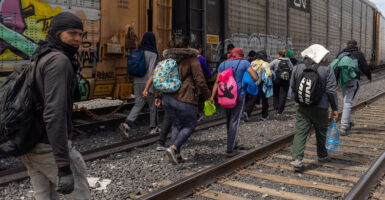
Late last week, at least 80 illegal immigrants were abducted from a train by armed gunmen in the Gulf coast state of Veracruz. According to accounts, the train operators “didn’t stop where they usually do.… Instead, they continued on to a remote area where the trains that come from Coatzacoalcos pass by.” There the gunmen were waiting and “went straight—like they already knew—to (the cars in which the) women and children were riding.” Sadly, this violence is nothing new. According to Mexico’s National Human Rights Commission, more than 400 kidnappings …
Galvanized by the brutal slaying of his 24-year old son on March 28, Mexican poet and intellectual Javier Sicilia has become the loudest voice of discontent in the ongoing war against criminal organizations in Mexico. The murder of Juan Sicilia and six other youth is only a snapshot of the violence that has claimed more than 35,000 lives since 2006. Sicilia’s cries of frustration are justified, capable of awakening the Mexican people to the necessity of fighting crime at every level of society. Unfortunately, in his rage he has lost …
There is no shortage of criticism of our immigration laws from detractors who contend that they are unjust and immoral. And though criticism of U.S. immigration laws can be fierce – particularly in the case of Arizona’s SB 1070, the Support our Law Enforcement and Safe Neighborhood Acts – Mexico’s much harsher immigration laws rarely get noticed. Upon Arizona’s passage of SB 1070, critics attacked the law with claims of racial profiling. Among the opponents were the open border lobby, including the Mexican American Legal Defense Fund (MALDEF), other liberal interest groups, President …
The resignation of U.S. Ambassador to Mexico Carlos Pascual, under pressure from President Felipe Calderon, is bad news for the Obama Administration. There is little doubt that this is a “blow to U.S.-Mexico relations, in that the personal overcame the institutional.” It will damage joint U.S.–Mexico efforts to fight organized crime in Mexico and protect U.S. security at home by turning a common fight against a real enemy into a political contest between national leaders. Since assuming the key ambassadorship in 2009, Pascual played an active role in efforts to …
The March 3 working meeting between Mexico’s President Felipe Calderon and U.S. President Barack Obama loomed as a showdown over Mexico’s sputtering war against crime and increasingly prickly relations between Mexico and the U.S. The encounter, however, took a sunny turn when the two presidents agreed to focus on trade, regulation, and energy issues rather than come to dagger points over Mexico’s seemingly out-of-control crime war. The presidents agreed on a plan to settle a long-standing dispute over a North American Free Trade Agreement (NAFTA) commitment to allow a limited …