• The Heritage Network
    • Resize:
    • A
    • A
    • A
  • Donate
  • congress

    House Committee Examines Obama’s Unconstitutional Appointments

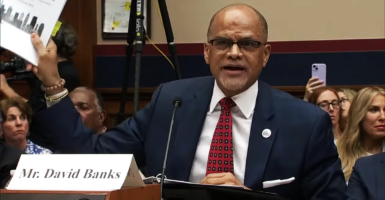
    President Obama’s illegal non-recess appointments are unconstitutional and defy the process the Founding Fathers intended, Sen. Mike Lee (R-UT) told a House committee Wednesday. The House Oversight and Government Reform Committee invited a handful of constitutional law experts to discuss the four controversial appointments Obama made in January. Citing delays in the Senate, Obama installed Richard Cordray (pictured) as director of the Consumer Financial Protection Bureau and Richard Griffin Jr., Sharon Block, and Terence F. Flynn as members of the National Labor Relations Board. Lee, a constitutional expert and scholar, … More

    Congress Needs to Fix Itself in 2012

    Congress owes America better start for 2012, and not to repeat the way it ended 2011. Even if the Senate is hopelessly dysfunctional, the House could do better.  The final House session of 2011 was a prime example of how to lose public confidence.  The body was gaveled into session on short notice Friday morning, December 23rd, and a mere ten members approved legislation for the entire 435-member House.  The others had left for the holidays, so instead of a roll call vote on a controversial two-month lowering of the … More

    House of Representatives Makes Legislative Data More Accessible

    Citizens across America will have a powerful tool to hold their elected leaders accountable come January. The House of Representatives today adopted new standards that increase transparency and improve access to legislative data. All of the information will be publicly available in a searchable format on one website. “With the adoption of these standards, for the first time, all House bills, resolutions and legislative documents will be available in XML in one centralized location,” said House Administration Chairman Dan Lungren (R-CA). “Providing easy access to legislative information increases constituent feedback and ultimately … More

    Morning Bell: An 11th-Hour Spending Deal That Comes Up Short

    With Christmas just a week away and the new year nearly upon us, Congress came within a whisper of yet another potential government shutdown and once again demonstrated its inability to make substantive spending cuts and deliver the American people the reforms necessary to secure America’s fiscal future. Rather than produce a timely budget by way of standard operating procedure, congressional leaders again butted up against the deadline and reached a deal on a trillion-dollar “mega-omnibus” nine-bill appropriations package that sadly is yet another disappointing failure to rein in government … More

    Chart of the Week: Where Does the Federal Government Get Its Revenue?

    President Obama and Republicans in Congress continue to wage war over an extension of the payroll tax cut. But missing from the debate is any discussion of comprehensive tax reform that would eliminate payroll taxes altogether. Social Security and Medicare payroll taxes are the second-largest source of federal revenue, surpassed only by personal income taxes. This week’s chart from Heritage’s 2011 Budget Chart Book depicts federal revenue by source. That chart would look quite different if Heritage’s tax-reform plan were enacted into law. That plan, part of the Saving the … More

    Scribecast: Author Peter Schweizer Exposes the Permanent Political Class

    Peter Schweizer doesn’t have many friends on Capitol Hill these days. So few, in fact, that he was told not to even show his face at a congressional hearing on insider trading — even though that hearing was the direct result of his new book, “Throw Them All Out.” Schweizer, a fellow at the Hoover Institution, spoke at The Heritage Foundation this week about his research on the “permanent political class” in Washington, D.C., and the crony capitalism that has enraged so many across America. We caught up with him … More

    Who REINS in Washington Anyway?

    Congress rarely considers a bill that would change the way Washington works. But this is exactly what the Regulations from the Executive In Need of Scrutiny (REINS) Act would do. The REINS Act (H.R.10) would require Congress to approve all “major” regulations—those costing $100 million or more annually—before they take effect. On December 7, it passed the House of Representatives by an impressive vote of 241–184. It is now headed for consideration in the Senate. The Current Process Currently, Congress passes laws with overly broad or intentionally vague statutory language. … More

    Junk the Medicare Physician Payment Formula

    In January 2012, Medicare physicians face a 27.4 percent cut in their payment for treating senior and disabled citizens. Congress, as it has routinely since 2003, is feverishly preparing legislation to stop its own goofy Medicare payment formula from going into effect. If they don’t succeed this year, seniors can be assured of severe problems accessing physician care. The reason Congress goes through this silly routine almost every year is that it is unable or unwilling to make serious changes in the Medicare program. Today, Medicare payment for doctors is … More

    Appropriations Tracker: Monitoring FY 2012 Spending Bills

    The Heritage Foundation yesterday launched its fiscal year (FY) 2012 Appropriations Tracker, which monitors the progress of appropriations bills as they move through the House and Senate. The tracker will be updated regularly to reflect the most recent status of these discretionary spending bills as they progress through each chamber. Appropriators are aiming to meet the $1.043 trillion limit established under the Budget Control Act (BCA), the product of last summer’s debt ceiling negotiations. (The BCA does not specify amounts for individual appropriations bills.) Because this spending target is disturbingly … More

    Super Committee Gets Recommendations from Senate Finance Republicans

    Next month, the “super committee” will release its plan to find savings in the federal budget over the next decade. A report from the Senate Finance Committee Republicans outlines a possible route forward and includes reforms to reduce unaffordable federal spending on health care and improve programs like Medicare and Medicaid. Several of the ideas outlined in the report are similar to The Heritage Foundation’s own Saving the American Dream plan to reduce the debt and restore prosperity. The Heritage plan also offers additional details on how to achieve some … More