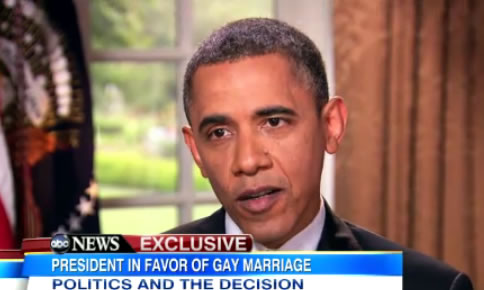
On Friday, President Obama announced an “accommodation” to the Health and Human Services (HHS) contraceptive mandate: Rather than requiring religious organizations that provide group health insurance to cover sterilization, contraception, and some abortion-inducing drugs, those religious organizations will now likely pay higher premiums to insurance companies who will provide these “free services” to employees. This accommodation doesn’t remedy the religious liberty problem. But no partial change to the HHS regulations alters the fact that, within Obamacare, health insurance decisions are dictated by the federal government rather than by individuals and …
In my last post, I challenged a common assumption about equality and justice—that inequality per se is inherently unjust, and therefore that the gap between rich and poor is as well. In what follows I contest another popular notion touted by redistributionists—that unequal wealth as such causes hardship for the poor. As I argue in my recent National Affairs article, [T]he implicit assumption behind the case for the injustice of income inequality is that the wealthy are the reason why the poor are poor, or at least why they cannot …
In last week’s Republican primary debate, a Jacksonville, Florida, resident asked the candidates what role their religious beliefs would play in their decision-making as President. The issue of religious faith continues to be important for many voters. As I suggest in a recent WebMemo, questions about religion that relate to a candidate’s potential conduct in office—questions like the one asked by the audience member in Jacksonville—may be useful. Questions about personal religious piety may be less so. Questions about a candidate’s personal practices when it comes to prayer, church attendance, …
In his State of the Union Address, President Obama placed economic inequality center stage. He framed this issue in terms of fairness or justice to the poor. If our goal is to help people escape poverty, though, we need to ask some more urgent and personal questions. A debate about the “gap” between rich and poor isn’t a debate directly about people—it’s about, well, a gap. Focusing on the gap between individuals distracts us from focusing on poor individuals themselves. Rather than pretending that economic inequality is the main problem, …
In his recent speech in Kansas, President Obama accused Republicans of advocating “you’re on your own economics”—a philosophy that supposedly holds that “we are better off when everyone is left to fend for themselves and play by their own rules.” The implication is that unless you favor raising taxes and levying stricter economic regulations, Obama assumes you want to leave poor people out in the cold. In contrast, the President promotes his own economic ethic in the following terms: “We are greater together than we are on our own.” While …
This week is a time of giving thanks, and one of the most treasured gifts for which many Americans are thankful is freedom. In the West, freedom lies at the center of an inherited tradition that goes by the name “liberal,” from the Latin liber, meaning “free.” To sustain genuine freedom, we bear the responsibility of understanding the roots of this tradition and preserving it from error, perversion, and decay. Today in Washington, D.C., the word liberal carries connotations of big government and left-leaning political ideology. The same is probably …
Is individualism adequate to sustain liberty and rein in government? This issue surfaced during the Republican primary debate last week in Las Vegas. “This country has always put people in groups” and treated them accordingly, said Representative Ron Paul (R–TX). America needs to move away from this kind of “group mentality,” he says, toward a more individualistic perspective: “We need to see everybody as an individual. And to me, seeing everybody as an individual means their liberties are protected as individuals.” While not disagreeing with the fact that government should …
On October 5, the Supreme Court will hear oral arguments in a very important case concerning religious freedom. Several religious freedom cases have been in the news lately. Such cases should remind us to take seriously the nature of religion itself. Is religion something only to be preached about and celebrated in seminaries and worship services, or is it something to be practiced in daily life and work? Is religion solely private, or does it also take public form? Our assumptions about the nature of religion—assumptions about what it is …
President Barack Obama proposes to pay for his $447 billion jobs bill mainly by limiting tax deductions for wealthy Americans. Unfortunately, if enacted, this policy will likely dampen charitable giving and further shift perceived responsibility for social welfare from individual donors to the state. The President’s plan calls for lowering the rate at which wealthy taxpayers can take itemized deductions—from the current rate of 35 percent down to 28 percent, beginning in 2013. The change would affect individuals making more than $200,000 (and families making more than $250,000) per year. …