• The Heritage Network
    • Resize:
    • A
    • A
    • A
  • Donate
  • Senate Budget Tax Plan: Slowing Opportunity for Americans to Grow Income

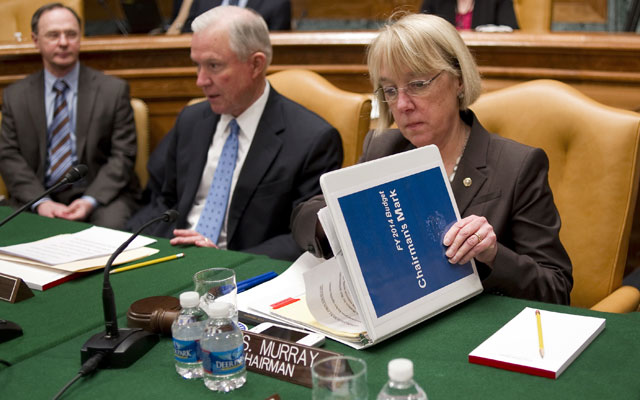
    Senator Patty Murray’s (D–WA) budget tax plan directly calls for $975 billion in new tax increases over the next decade. Indeed, the Senate budget is only a framework document, but it clearly lays out who should pay the higher taxes. The Democratic majority wants higher taxes by “eliminating loopholes and … More

    Obamacare Continues to Restrict Hiring

    The Federal Reserve Beige Book, released on March 6, cited Obamacare as a factor in slowing hiring and employment growth. The Beige Book is a report published eight times a year that details the economic activity in the 12 different Federal Reserve regions. As this most recent report explains, “Employers … More

    The “Buffett Rule” Returns

    President Obama’s so-called Buffett Rule just won’t go away. It is back in its latest iteration because Senate Democrats proposed it to partially offset the soon-to-begin sequestration spending cuts. In the Senate Democrats’ version, the Buffett Rule, named after famed investor and vocal advocate for (and benefactor of) liberal policy … More

    Saving Medicare: New Legislation from Retiring Congressman Herger

    Retiring House Ways and Mean Health Care Subcommittee chairman Wally Herger (R–CA) has introduced the most complete and detailed major Medicare reform proposal in a decade. Herger leaves a rich legacy with the Save and Strengthen Medicare Act (H.R. 6645). The bill moves Medicare to a defined-contribution model with competition … More

    Unemployment Rate Drop Due to Workers Leaving Labor Force

    The November employment report appeared to be good news. The unemployment rate fell to 7.7 percent, the lowest level since 2009, and the economy created 146,000 jobs. However, a closer reading of the details shows that the labor market is not recovering any faster but instead continuing its long, painful … More

    Medicare Trustees to America: A Bleak Future Without Real Reform

    On September 8, 2011—well after the enactment of Obamacare—President Obama told Congress: “Millions of Americans rely on Medicare in their retirement. And millions more will do so in the future.… But with an aging population and rising health care costs, we are spending too fast to sustain the program. And … More

    Obamacare: Higher Taxes, More Uninsured, Says CBO

    On March 13, the Congressional Budget Office (CBO) updated its score of Obamacare, announcing that the program is $48 billion cheaper than in its previous 2011 score. The primary reason for this change is that more individuals will lose their employer-provided coverage than originally anticipated, and the government will collect … More

    Ryan-Wyden: The Basic Ingredients of Structural Medicare Reform

    Congressman Paul Ryan (R–WI) and Senator Ron Wyden (D–OR) have proposed a new bipartisan framework for structural Medicare reform. It continues the conversation with the American people on a solution to save the popular but financially troubled entitlement program. While there are differences between the proposal and the Heritage plan … More

    Youth Hardest Hit in Obama Economy

    Whom has the recession hurt the most? There is no easy answer to that question—job opportunities have diminished for every ethnic and demographic group. But one of the worst hit groups has attracted little media attention: the youth. Younger Americans overwhelmingly voted for Obama in 2008, but the Obama economy … More

    What’s the Worst That Could Happen With The New Health Law?

    The Patient Protection and Affordable Care Act is one of the largest and most complicated overhauls ever enacted. Policy experts continue to debate the impact it will have. Among the issues that has raised concerns is its cost. Supporters point to an estimate by the Congressional Budget Office that the … More