At a recent Energy and Commerce hearing, health policy experts testified on the effects Obamacare will have on jobs and employer-sponsored coverage. The title of the hearing said a lot: “Cutting the Red Tape: Saving Jobs from PPACA’s [Patient Protection and Affordable Care Act] Harmful Regulations.” Since Obamacare will require employers to spend more money on health care plans for their employees, it’s expected to hinder job creation. To avoid this, a discussion draft under review would prevent the regulations and requirements in the new law from affecting grandfathered health …
Obamacare changes the health care system in several ways that harm physicians. It also fails to address the pivotal issues facing physicians today—for example, low government reimbursement rates that fail to cover the cost of care, or the need for state-by-state medical malpractice reform. It should have come as a surprise, then, that during the health care reform debate, the American Medical Association (AMA) emerged as one of the new law’s supporters. But rather than symbolizing physicians’ support for the left’s health care overhaul, the AMA’s stance on Obamacare just …
Last week, the state of Wisconsin released a report summarizing the effects of Obamacare on the Badger State’s health care system. The study, which was conducted by Gorman Actuarial and MIT Economist Jonathan Gruber—an Obamacare supporter—and commissioned by former Governor Jim Doyle (D), provides further proof that Obamacare is on track to break the promises President Obama made to the American people regarding his plan for health care reform: “It will provide more security and stability to those who have health insurance. It will provide insurance for those who don’t.” …
Last Wednesday, the Senate Health, Education, Labor and Pensions Committee released a grim report showing a reduction in the availability of child-only policies for parents looking to purchase health insurance for their children. They findings show that, “Of the 50 states, 17 reported that there are currently no carriers selling child-only health plans to new enrollees. Thirty-nine states indicated at least one insurance carrier exited the child-only market following enactment of the new health care laws.” The reason for this decline in child coverage is that specific provisions of Obamacare …
In recent Heritage research, Boston University law professor Gary Lawson describes the shortcomings of the current informal rulemaking process, in which bureaucrats use power delegated to them by law with little oversight or accountability. Using Obamacare as his prime example, Lawson writes: [Obamacare] will not emerge from the constitutional process for lawmaking, in which the House and Senate vote on bills and then present them to the President for signature or veto. Rather, the operational law of [Obamacare] will emerge from administrative rulemakings by unelected—and in many instances largely unknown—agency …
Yesterday, the Department of Health and Human Services (HHS) added new preventive care measures specific to women’s health to the long list of provisions that will drive up premiums under Obamacare. Not only will the new regulations infringe upon Americans’ freedom to choose a health plan in keeping with their values, as we explained here, but they serve as a precursor to more pricey regulations to come. HHS issued regulations last July on the preventive measures that insurers must cover with no cost-sharing, but as part of the new law, …
Yesterday, the Centers for Medicare and Medicaid Services (CMS) released its new projections of national health spending trends through 2020. The findings, which estimate health care spending to reach more than $4 trillion by 2020, come as no surprise: Runaway spending has overtaken the United States health care system and is on the rise. More notably, the study confirms Obamacare does not “bend the cost curve” but only increases government’s share of spending in the health care system instead. Already, the White House has tried to spin the report as …
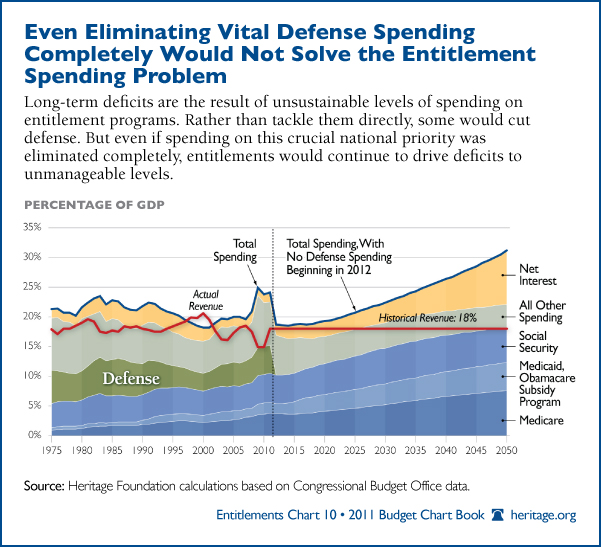
The recent proposal from the Gang of Six has received attention as a possible deal for raising the debt ceiling. On health care, the G6 proposal was initially weak, and as the story goes, the Gang allegedly beefed up its changes to health care spending to attract more support. But in reality, the improvements are small, and the plan ultimately fails to adequately address federal spending on health entitlements or to promise acceptable solutions down the road. Medicare, the health entitlement for the elderly and disabled, represents the largest driver …
This week, the House Budget Committee and Energy and Commerce Committee held hearings to examine the Independent Payment Advisory Board (IPAB), a board of unelected bureaucrats tasked under Obamacare to reduce the growth in Medicare spending. During the Budget Committee hearing, Grace-Marie Turner, president of the Galen Institute, described the board: [T]he IPAB is unprecedented in the power given to unelected officials to direct hundreds of billions of dollars in federal spending. The IPAB will give unelected, unaccountable government appointees the power to make decisions about payment policy in …
This week, the Institute of Medicine (IOM) released its recommendation of women’s preventive services that should be covered with no co-pay or deductible under Obamacare—a list that included birth control and emergency contraception. While this raises important questions regarding social policy, it’s also relevant to the ongoing debate about Obamacare and the consequences of allowing bureaucracy to over-regulate health benefits. Obamacare’s requirements that health plans cover certain preventive measures with no cost-sharing were implemented through Health and Human Services (HHS) regulations in July of 2010, but as part of the …