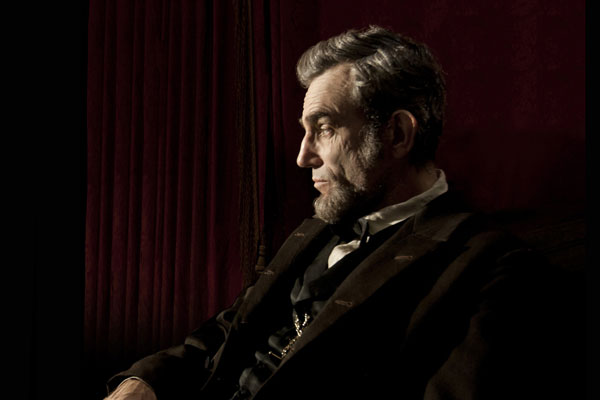
To sell his tax-code tweaks, new regulatory schemes, and insatiable ardor for big government, President Obama invoked Abraham Lincoln in his State of the Union address: “I’m a Democrat. But I believe what Republican Abraham Lincoln believed: That government should do for people only what they cannot do better by themselves, and no more.” Was Lincoln the father of big government? In a new Special Report, Allen C. Guelzo, Ph.D., of Gettysburg College lays out the argument that the modern state’s paternity lies with the Progressives. If big government means …
February 6 is Ronald Reagan’s birthday. While the right has long looked to Reagan as the standard-bearer of conservative leadership, over the past few years, even liberals are waxing Reaganesque. For instance, before he was the class warrior in the mold of Teddy Roosevelt, President Obama invoked the Gipper to support his millionaire tax. As Reagan historian Steven Hayward remarked, “Ever so slowly, liberals are attempting a subtle revisionism” of our 40th President. Let’s set the record straight. Just take a look at Ronald Reagan’s greatest achievements as evidence of …
People are obsessed with equality (or the lack thereof) these days. Outraged about inequality of income, the self-described 99 percent took to urban camping to berate the top 1 percent of income earners. In his State of the Union Address, President Obama trotted out Warren Buffett’s secretary to underscore the injustice that the rich and poor do not have an equal tax burden—supposedly, the rich have too much and pay too little. On one level, a certain concern with inequality is understandable in a nation such as ours, founded on …
Certain Supreme Court cases haunt the American people. When particular issues land on the Court’s docket, some Americans proclaim that, of course, the Court will rule this way because, don’t you know, there is a precedent for that. Free speech, free exercise, the Commerce Clause, and abortion—these are only a few of the issues that cause Americans on the left and the right to hold their breaths and wonder, “Will this be the case where the Court overturns (fill in the blank case). Is Americans’ concern with precedents misplaced? Is …
Free-market capitalism is losing supporters these days. Wall Street occupiers blame banks, financial firms, and Wall Street for the bad economy. President Obama derides free markets, in true straw-man fashion, as you’re-on-your-own economics with “a free license to take whatever you want from whoever you can.” Even some Republican presidential candidates have inveighed against capitalism. What about the Founders? What did they think about free-market capitalism? Although the term capitalism was scarcely in use at the time of the Founding, the Founders supported the principle of economic liberty underlying it. …
This week, President Obama made several recess appointments to the National Labor Relations Board and the Consumer Financial Protection Bureau. But here’s the catch: The Senate was in session, not in recess. As Heritage’s Todd Gaziano and Edwin Meese argue, President Obama’s unilateral determination that the Senate’s pro forma sessions were not real undermines the separation of powers. This is the opportunity to remember what the separation of powers is and why it matters. The principle of separation of powers states that the executive, legislative, and judiciary powers of government …
In recognition of the 63rd anniversary of the United Nations Declaration of Human Rights, President Obama proclaimed this week Human Rights Week. Americans know a thing or two about rights, considering that the country was founded on the self-evident truth that “all men are created equal, that they are endowed by their Creator with certain unalienable Rights.” But, when the President invokes human rights, is he talking about the same concepts from the Declaration of Independence? That is to say, are human rights the same as natural rights? At the …
It seems people think that they have a right to everything these days: a right to the Internet, to free health care, to a good job, and to a free college education. The Supreme Court is famous for finding new rights in the “penumbras” and “emanations” of the Constitution. Today marks the 220th anniversary of the ratification of the Bill of Rights. What better opportunity to look at the rights the Constitution actually guarantees? A right is not merely something you want or claim. You may, for example, want a …
Yesterday, Barack Obama became the second President to use a speech in Osawatomie, Kansas, as an opportunity to take on the mantle of a previous President. President Obama evoked the memory of Theodore Roosevelt, who gave his famous “New Nationalism” speech laced with the now-rote themes in political rhetoric: “special interests,” the necessity of regulating corporations, and the clear distinction between human rights and property rights. Roosevelt was also playing presidential dress-up: he invoked the legacy of Abraham Lincoln to justify transforming America from its founding principles, in particular the …
On this December 6, 1865, the 13th Amendment was adopted and slavery was abolished. There has always been intense debate about the existence of slavery in American history, precisely because it raises questions about this nation’s dedication to liberty and human equality. At the time of the Founding, there were about half a million slaves in the United States, mostly in the five southernmost states, where these individuals made up 40 percent of the population. From the outset, the Constitution contained three key compromises on enumeration, the slave trade, and …