
• The Heritage Network
    • Resize:
    • A
    • A
    • A
  • Donate
  • Treasury to TARP Inspector General: Drop Dead

    The special inspector general for the TARP program, Neil Barofsky, has made a reputation for himself by issuing tough assessments of the troubled federal program for troubled assets. It’s been a problem for Tim Geithner’s Treasury Department. No one, after all, wants a watchdog at their heels. Treasury’s solution: muzzle the dog. Specifically, Treasury is considering excluding the special Inspector General — known as “SIGTARP” in bailout circles — from the new $30 billion small-business lending program announced by President Obama in his state of the union address.

    Credit Card Regs No Credit to Congress

    Who said the 111th Congress has never accomplished anything? Today, major parts of the Credit Card Act of 2009 take effect. Enacted last May with great fanfare, the legislation restricts rate increases on existing balances, requires promotional rates to last at least six months, limits over-limit fees, mandates 45 days notice before certain terms of service can be changed, and imposes a host of other requirements intended to help credit card users. So should consumers be celebrating? Maybe not quite yet. As it turns out, the legislation ran smack dab … More

    Severe Weather Warning for Commercial Real Estate: New TARP Not the Answer

    The Congressional Oversight Panel (COP), the watchdog board created by Congress to oversee the TARP program, yesterday issued the equivalent of a severe weather warning for commercial real estate markets. Like the residential market before it, the markets for retail, apartment, and other business properties are facing a wave of defaults which, says the panel, “would trigger economic damage that could touch the lives of nearly every American.” The numbers are grim. According to the COP, over the next four years $1.4 trillion in commercial real estate loans will come … More

    Rising Red Tape Erodes Economic Freedom in United States

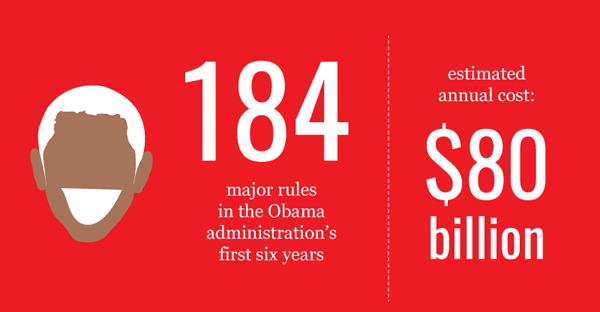
    Red tape – rules, regulations, restrictions and mandates imposed on America – rose alarmingly in 2009, mirroring the overall decline in economic freedom in the United States, as reported in this year’s Index of Economic Freedom. That’s the conclusion of an upcoming Heritage Foundation report detailing trends in federal regulation. In fact, the cost of new regulations imposed on Americans during fiscal 2009 was the highest in 17 years, weighing in at over $14 billion per year. Perhaps surprisingly, most of these new regulations were adopted by the Bush Administration. … More

    TARP Inspector General: Same Road, Faster Car

    In an unusually harsh report released yesterday, the government’s Special Inspector General for TARP blasted the bailout program, charging that it has not only failed to meet its goals, but that — absent change — it may have made things worse. Among other things, Inspector General Neil Barofsky concluded that because of the bailouts, the market is “more convinced than ever that the Government will step in as necessary to save significantly significant institutions.” This, he says, creates a moral hazard, through what he calls a “heads I win; tails, … More

    Obama’s Bank Tax: Missing the Target

    In his State of the Union address Wednesday night, President Obama repeated his call for a tax on banks, calling it “a modest fee to pay back the taxpayers who rescued them in their time of need.” That sounds good, everyone agrees the taxpayer’s money should be paid back. But there’s a bit of misdirection going on here. As shown in the chart above, most big banks have already paid back the government money they received, with interest. On the other hand, most of the big companies that still owe … More

    President Obama and the War on Banks

    Forget the war on terrorism, the war on drugs, even the war on poverty. President Obama seems to have declared a new war, a war on banks. It was launched last week with the proposal of a “bank tax,” supposedly meant to get TARP bailout money back to taxpayers (although it would leave out firms such as General Motors that actually owe most of the money). It continued yesterday with the President’s proposal of new bank regulations — limiting what banks can invest in as well as limiting to total … More

    Reuters: “France Welcomes Obama’s Bank Regulation Proposals”

    According to a Reuters report, French economy minister Christine Lagarde today applauded President Obama’s call for more regulation of the U.S. financial sector. “I am delighted that [the] president of the United States is following our lead,” she added. In a possibly related story, the Dow Jones yesterday dropped by 213 points, the largest one day drop since last October.

    Diversity v. Neutrality: Minority Groups Make Case Against Regulation

    Fostering diversity in, and minority access to, channels of communication has long been a key goal of the Federal Communications Commission. In practice, this all too often has been interpreted to mean ownership limits, set-asides, preferences and other mandates imposed by the agency. Usually lost in the heated debates is the fact that ill-considered regulation itself can impede minority access and diversity. In comments filed at the FCC last week, a group of sixteen minority and civil rights organizations — ranging from the Lawyers’ Committee for Civil Rights Under Law … More

    Report: Over 1,000 Regulations Void?

    According to a report recently submitted to Congress by the Congressional Research Service over 1,000 regulations written by federal agencies over the past decade may be invalid. The reason: copies of the rules were never given to congressional oversight committees as required by law. As a result, pending enforcement cases and other actions under these rules could be thrown out of court.