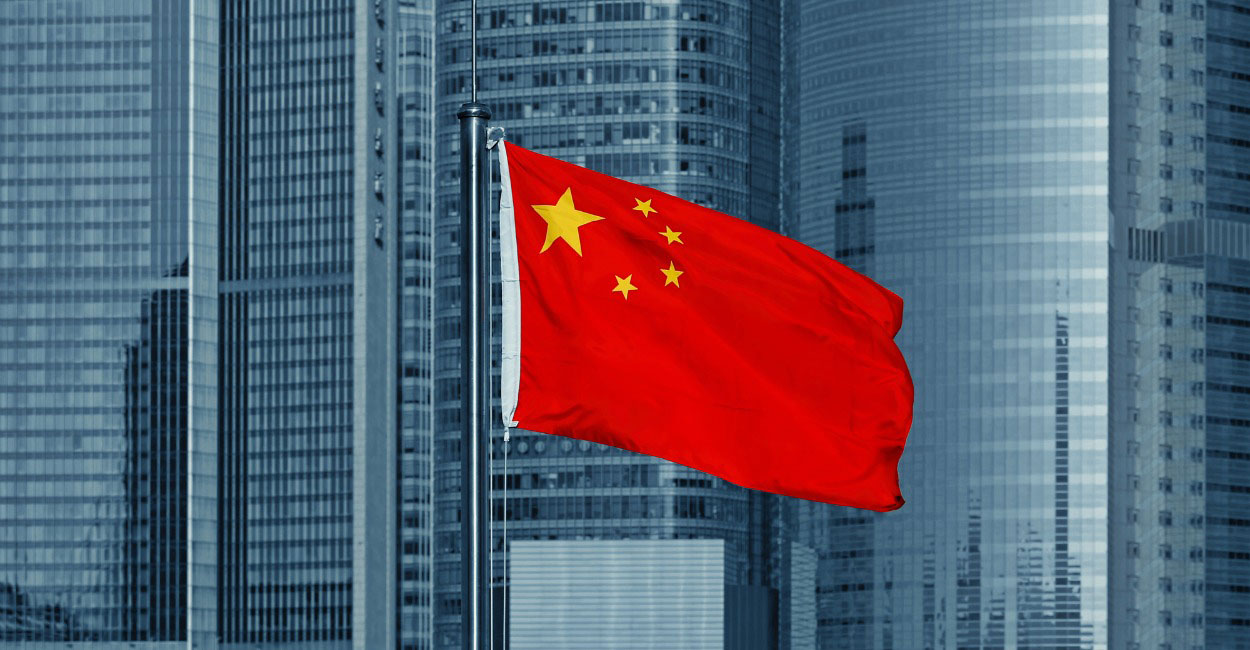
Of the countries that present the greatest foreign policy challenges to the U.S. and will do so in the decades to come, China has to be close to the top of the list, if not number one. Every day brings a new gantlet thrown down by China to American leadership. Thursday, it was of China’s launch of a rocket containing elements of its new space laboratory, images that will be exploited to their full potential in the service of Chinese public diplomacy. This is why the decision of the Broadcasting …
Sometimes the writing on the wall is 10 feet tall, and you have to be willfully blind not to see it. The September attack on the U.S. embassy in Kabul on September 13, which has now been linked to Pakistani secret service officials, is surely such an instance. Getting attacked by terrorists backed by someone who is supposedly your ally is a new low. As Heritage’s Lisa Curtis correctly remarks, the Obama Administration has to make it absolutely clear that this is a game changer in the Pakistani–U.S. relationship. If …
Most Americans identify China as the country most likely to challenge the United States globally, and many even expect China to replace American dominance. U.S. lawmakers are finally waking up to the challenge, which is not only military and economic but extends to the spheres of information and public diplomacy. At least, some on Capitol Hill are determined make sure the United States faces the challenge and the Chinese government does not get away with brazen opportunism in our free and uncensored media environment. Consider these numbers: China’s state media (whose news reporting …
The counterterrorism strategy published by the Obama Administration in June was not exactly a hard-hitting document, turning counterterrorism into a law enforcement issue and generally containing few details and little new thinking. When Secretary of State Hillary Clinton addressed the subject on September 9, the subject took on more life. As a Senator from New York, she had spent time at Ground Zero and met with the victims and their families, which made her grasp of the subject at least instinctive and immediate. Yet the great and unacknowledged irony in …
Since the beginning of the Arab Spring, the direction of the Middle Eastern revolutions this year has been a concern. Attempts by the new governments to shut down media coverage of demonstrations suggest that freedom of the press cannot be taken for granted. Without law and order, the future of the Arab revolutions is in question. Conditions in Egypt have from the beginning been among the most troublesome. And now the violent mob attacks on the Israeli embassy in Cairo over the weekend have spurred a new round of trouble …
The Obama Administration has been seeking advice on how to calibrate its messaging on the 10th anniversary of September 11, conscious of how it may play in the media both domestically and internationally. The conclusion that seems to have been reached by the White House speechwriters is that prudence calls for two different messages, one domestic and one foreign. Now, most politicians speak differently depending on whether their audience is domestic or foreign, but those who speak from conviction do not speak from both sides of their mouths. This momentous …
As governments in the Middle East struggle to come to grips with the surging demands for freedom of expression among their populations, media across the spectrum are coming under attack. Repressive regimes do not discriminate between old media and new. Sometimes the threat does not originate from a government but from counterrevolutionary forces operating with the tacit blessing of officials who turn a blind eye. Reporters without Borders is doing yeoman’s work in day-to-day reporting of these human rights violations. For the U.S. government and for civil society, the important …
Secretary of State Hillary Clinton is famous for approaching her various jobs with discipline, and discipline was the message she repeatedly conveyed at the National Defense University Tuesday morning in her “conversation” with Secretary of Defense (and former chief of staff to her husband) Leon Panetta: The world needs U.S. leadership, even in tough budgetary times. Many of Clinton’s remarks were directed at the congressional “Super Committee” looking at budget cuts. She urged Congress not to let the deficit get in the way of U.S. global engagement, and not to …
Though the best-known controllers of Internet freedom are China, Cuba, Iran, and North Korea, other countries also attempt to limit Internet access for a variety of reasons. The Turkish government is a case in point, banning more websites than any European nation. In late 2009, the Turkish government stopped releasing statistics, but the number of blocked websites could be as high as 12,000. Turkey blocks access to Google, claiming that Google does not comply with Turkish tax law, which Google disputes. YouTube has also been blocked since May 2008. The …
By the end of August, if Tehran’s plans progress as announced, Iranians going online will find themselves restricted to communicating only with each other—under the watchful eye of Iran’s cyber censors. Plans for an all-Iranian intranet to replace access to the Web were announced in early July by Iran’s Communication and Information Minister (an Orwellian title if ever there was one), Reza Taqipour Anvari. From Tehran’s point of view, a “National Internet”—or “Clean Internet,” as it is also described—would take already considerable efforts at control to a new level. There …