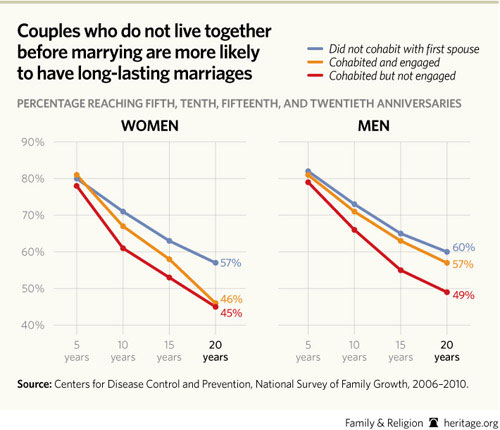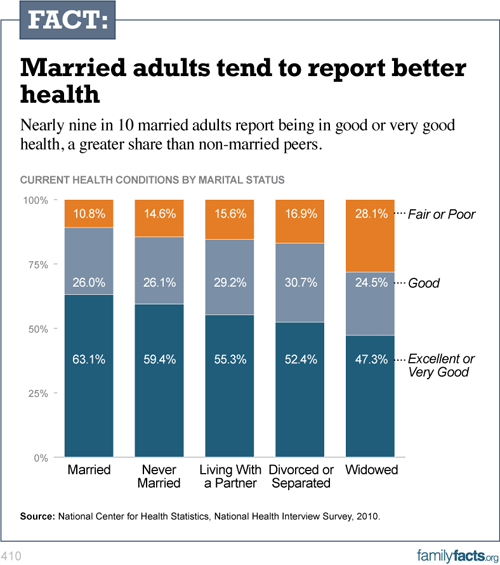
Marriage is antiquated and on its ways out, and cohabitation is the relationship of the future, the relationally avant-garde would have us believe. Take a recent headline, for example: “Living together may be mentally healthier than marriage,” it claims, citing a study published in the February issue of the Journal …
February 7-14, 2012 is National Marriage Week. During this week, a series of blogs explores the latest trends in marriage and their implications for adults, children, and society. Though “Americans believe overwhelmingly in the importance of marriage,” for decades now, marriage has been steadily declining. Marriage. Americans have become less …
High-quality social science research shows that marriage is associated with a number of health benefits. Studies indicate a strong link between marriage and mental health, in particular depressive symptoms. Marriage can both affect and be affected by psychological well-being, through, for example, greater emotional and social support as well as …
Despite the increasing effort to strike “Christmas” from our common vocabulary, 91 percent of Americans say that they personally celebrate the holiday, according to a LifeWay Research poll. While it’s not surprising that almost all self-identified Christians (97 percent) celebrate Christmas, 89 percent of agnostics or those with no religious …
Tuesday, the Centers for Disease Control and Prevention (CDC) released preliminary U.S. birth data for 2008. A flurry of news stories followed. Two statistics dominated the headlines: the total number of births fell by 2 percent, after peaking in 2007, and teen birthrates declined as well, reversing a slight two-year …
“No family change has come to the fore in modern times more dramatically, and with such rapidity, as heterosexual cohabitation outside of marriage,” writes David Popenoe, Professor Emeritus of Sociology at Rutgers University and one of the preeminent family scholars in the country. The latest release by the CDC’s National …
Abstinence education is back in the headlines, prompted by a new study that shows such intervention can reduce teen sexual activity in the long term. The study, conducted by researchers at the University of Pennsylvania, appeared in this month’s issue of the medical journal Archives of Pediatrics and Adolescent Medicine, …
A new study concludes that abstinence-only education had a significant and long-term effect in reducing teen sexual activity. “The abstinence-only intervention reduced sexual initiation,” reports the study, which is featured in the most recent issue of the medical journal Archives of Pediatrics and Adolescent Medicine, published by the American Medical …