• The Heritage Network
    • Resize:
    • A
    • A
    • A
  • Donate
  • Time for a Georgia-U.S. Free Trade Agreement

    President Obama and President of the Republic of Georgia Mikheil Saakashvili recently announced that the two countries should start free-trade negotiations. Let’s hope both presidents are serious. Presidents Obama and Saakashvili should instruct the appropriate government agencies to expedite preparation of the agreement. The most recentU.S.trade agreements, with Colombia, Panama, and South Korea, each took more than five years to get from inception to implementation. This deal could get done in a fraction of that time. Both countries are already relatively open to international trade and investment, and the volume … More

    Trade, Tires, and Jobs

    “Over a thousand Americans are working today because we stopped a surge in Chinese tires,” asserted President Obama in his State of the Union Address. President Obama referred to steep tariffs that his Administration imposed on tires imported from China. Not everyone sees it that way. According to the Tire Industry Association (TIA): TIA believes this was a politically motivated decision that will end up costing more jobs than it saves. These tariffs will not bring back the jobs that the union claims have been lost; it will not create … More

    President Obama’s Year-End Trade Policy Blunder

    President Obama concluded 2011 by accomplishing the remarkable feat of making the United States look worse than Communist China when it comes to promoting global economic freedom. On December 29, the Obama Administration announced that sleeping bags from developing countries will now be subject to a 9 percent tariff. President Obama’s decision to hike tariffs on sleeping bags from developing countries came just one month after Hu Jintao, president of the People’s Republic of China and General Secretary of the Communist Party of China, announced the elimination of tariffs on … More

    Toyota Selling Cars to South Korea–From the United States

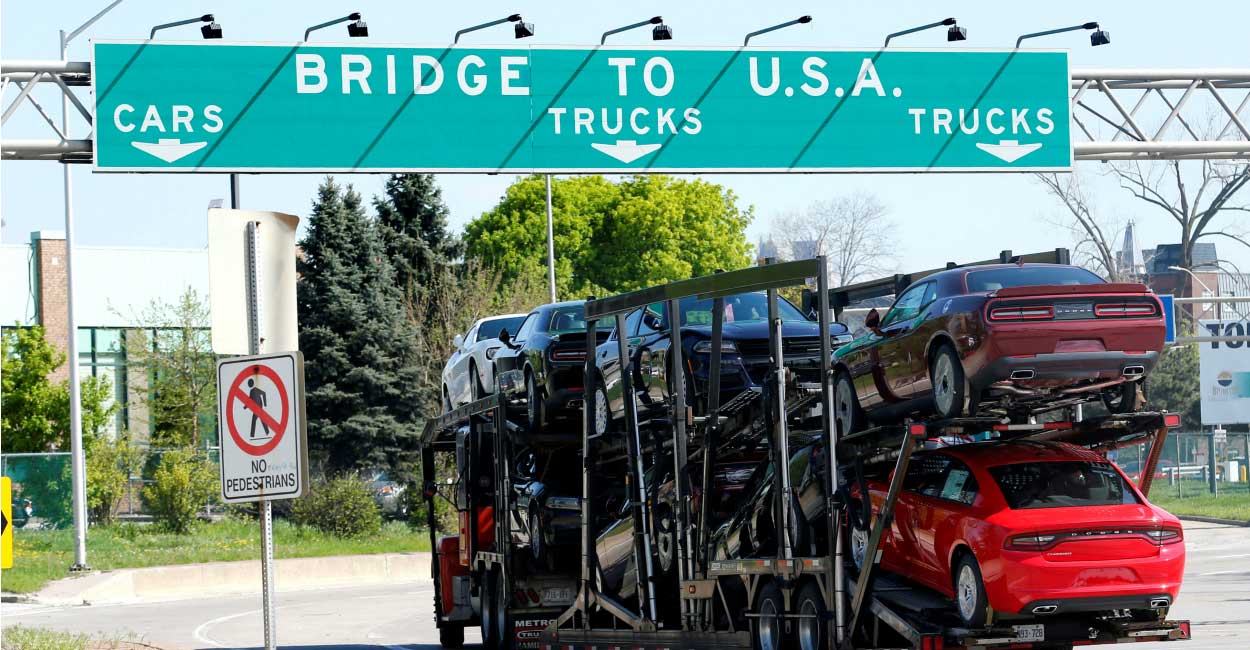
    Toyota recently announced it will begin exporting U.S.-built Camry cars and Sienna minivans to South Korea from plants located in Kentucky and Indiana. The cars will be shipped through the Port of Hueneme—ironically, one of the California ports that Occupy Wall Street protestors recently attempted to shut down. Some people may wonder why Toyota would ship U.S.-built cars 7,000 miles to South Korea instead of shipping Japanese-built cars 130 miles across the Korean Strait. One reason is the recently approved the South Korea–U.S. Free Trade Agreement (KORUS), which reduces South … More

    Alternate Titles for “Day Without Goldman Sachs”

    On December 12, Occupy Wall Street (OWS) attempted to shut down West Coast ports from Anchorage to San Diego. Protesters said that by shutting down the ports, they could shut down Wall Street’s profits. OWS organizers called their event “Day Without Goldman Sachs.” They also could have named their port protest: “Day Without Holiday Paychecks for Truckers”: “I just lost $400 today. These people say they represent the 99 percent. They don’t represent me,” said Mark Hebert, a long-haul trucker who was stranded in Oakland with 36,000 pounds of Kansas … More

    Freedom Is the Cure for U.S. Economic Woes

    President Obama recently lectured Americans on economics during a campaign stop in Osawatomie, Kansas. The New York Times congratulated President Obama’s speech as a potent blow against market economics. Cal-Berkeley professor Robert Reich called it the most important speech of his presidency. The Kansas City Star gushed over his good policy and good politics. In reality, President Obama disastrously misdiagnosed the source of U.S. economic problems: Over the last few decades, huge advances in technology have allowed businesses to do more with less, and it’s made it easier for them … More

    Don’t Do Business With Poor People? New York Times Readers Disagree

    A recent New York Times online report suggested that Americans should quit buying products made by poor people—because when people in the United States buy coffee, sugar, t-shirts, or tomatoes, they are guilty of exploiting impoverished workers. The story quoted the executive director of a group called Art Works Projects: “Most people don’t look at their shirt and realize if they got a good deal on it, someone down the line has been seriously abused.” She later added, “If you purchased something, you’re part of the problem, but you’re immediately … More

    Buy American. Sell American.

    In most parts of the country, American shoppers understand the importance of getting the best value for their dollars. This type of common sense does not apply in Washington, D.C., where one day the federal government buys $16 muffins and the next it tries to pass laws making it illegal for state and local governments to buy inexpensive foreign-made products. According to President Obama’s proposed American Jobs Act: None of the funds appropriated or otherwise made available by this Act may be used for a project for the construction, alteration, … More

    Trade Deficit Decrease May Reflect Weak Economy

    Today the U.S. Bureau of Economic Analysis announced that the trade deficit for July fell by $6.8 billion. Exports increased by $6.2 billion and imports decreased by $500 million. Historically, decreasing trade deficits are often a sign of economic weakness. When workers are unemployed, they have less money to spend. As a result, fewer goods are imported and the trade deficit may decrease. For example, the U.S. trade deficit fell by more than 50 percent from 2007 to 2009 as our economy weakened and unemployment increased. The amount of freedom … More

    U.S. Tariffs Penalize Back-to-School Shoppers

    Though parents might be rejoicing that the time has come for their kids to head back to school, their happiness could be tempered by a little-known fact: They’re paying import taxes on everything from clothes to lunchboxes, musical instruments to pencils. In 2010, the government collected $25.9 billion in tariffs on imported items. Shoppers paid a total of $13.9 billion in tariffs on products like jeans, t-shirts, and tennis shoes. Tariffs are a hidden tax that increases the price of many popular back-to-school items. In the chart below, you can … More