In remarks on World Environment Day, the Director-General of the World Trade Organization (WTO), Pascal Lamy, pointed out that, “Trade opening has much to contribute in the fight against climate change and to the protection of the environment.” Indeed, the most practical improvements in energy efficiency and protecting the environment over the past decades haven’t stemmed from government regulatory mandates. As shown in the analysis of the Index of Economic Freedom, the most progress has been driven by advances in freer trade and economic freedom. These unleash greater economic opportunity …
Remember Hotel Rwanda? That movie depicts the true story of a man fighting impossible odds to save everyone he could during the Rwandan Genocide in 1994. Hotel Rwanda was a symbol of desperate hope for survival. Almost two decades later, by contrast, Rwanda has many symbols of hope for a brighter future. As a matter of fact, those hopes for the future have already been transformed into the reality of greater prosperity and opportunity for many Rwandans. Indeed, recent years’ economic reforms have made Rwanda one of the notable economies …
Trade critics charge that free trade damages U.S. firms and workers. It’s true that individuals can experience trade-related job loss. Balanced against that, however, must be the overall gains in U.S. employment and productivity that stem from an open trading environment. Indeed, free trade fosters economic efficiency, which is the basis for dynamic growth and job creation. In a recent report entitled “Opening Markets, Creating Jobs: Estimated U.S. Employment Effects of Trade with FTA Partners,” the U.S. Chamber of Commerce points out that more than 17 million American jobs depend …
Economic freedom boosts job growth, as the Heritage Foundation’s 2010 Index of Economic Freedom empirically demonstrates. Now, there is more evidence in a state-level study just released by the Federal Reserve Bank of St. Louis, “Economic Freedom and Employment Growth in the U.S. States.” According to the Fed research, “states with greater economic freedom – defined as the protection of private property and private markets operating with minimal government interference – experienced greater rates of employment growth.” The authors of the study further note, “Our results suggest that policy-makers concerned …
In his latest article in Foreign Affairs, Carl J. Schramm, president and CEO of the Ewing Marion Kauffman Foundation, calls for “expeditionary economics” a new strategy for reconstructing economies of post-conflict countries. Pointing out that the current U.S. Army Stability Operations field manual “epitomizes the central-planning mindset that prevails in the international development community,” Mr. Schramm argues that a more strategic attention should be paid to a bottom up approach based on encouraging entrepreneurship that will greatly enhance reconstruction progress. According to Mr. Schramm, “Entrepreneurial capitalism is messy, since it …
Richard Florida, who is the author of “The Rise of Creative Class,” posed the following vital questions in his recent article “Free, Tolerant, and Happy” in The Atlantic: To what extent is economic freedom associated with tolerance and happiness? Are freer nations also more tolerant? Are their residents happier than those of other nations? To what extent is economic freedom also associated with other factors like affluence and material well?being, the level of human capital, and the transition to postindustrial economic structures? And what is the relationship between freedom and …
Professor Stephen Bainbridge, who is the William D. Warren Professor of Law at UCLA, shares the following insight on economic freedom: I’m happy to acknowledge that the free market economy has produced profound blessings. But I’m not willing to swap my birthright of economic freedom for a “PDA” (how technologically quaint). Nor am I willing to stand by without protest while ever larger chunks of the American economy are turned over to the Obamabots–the very definition of “Social Engineers, who seek to adjust mankind to conform with scientific utopias.” After …
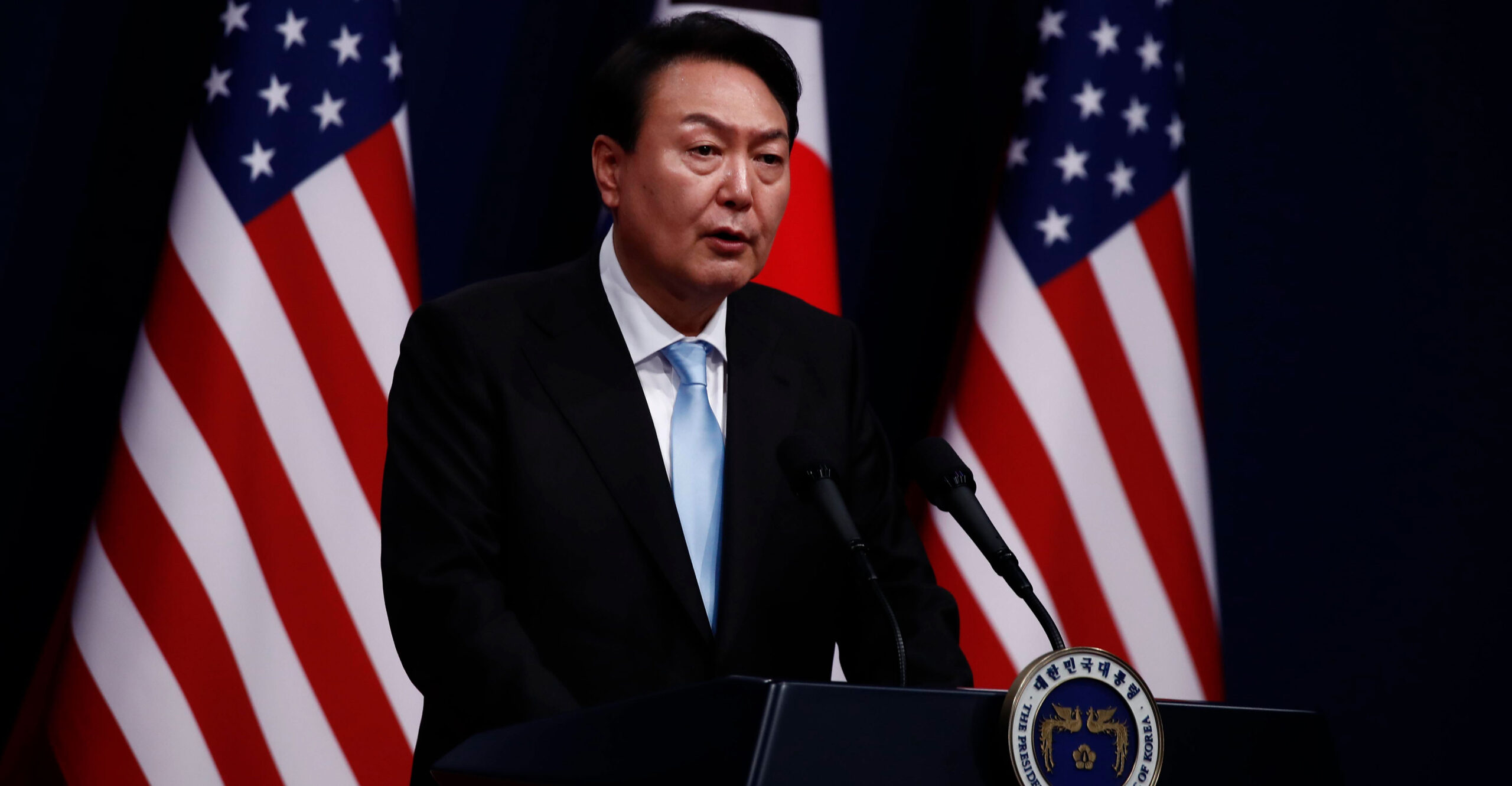
An April 12 article in the Washington Post poses a timely question concerning one of our longtime friends: “In a world of dangerously failed states and willful challengers to American leadership, South Korea is an astoundingly successful democracy that wants to be friends. But will America say yes?” At the center of this challenging question lies a free trade agreement that Washington and Seoul signed almost three years ago, back in June 2007. The agreement, commonly known as the KORUS FTA, has been characterized as “strong and balanced” and as …
On April 6, last minute action by the Obama administration averted a near trade conflict with Brazil concerning the trade-distorting U.S. cotton subsidy programs. With the provisional deal, the U.S. avoided about $830 million in trade sanctions on over 100 American exports targeted by Brazil. Those retaliatory tariffs would have gone into effect on April 7. More changes to U.S. cotton programs, which were declared illegal under the WTO’s 2008 ruling, have been pushed back to as early as 2012 when Congress will have to revisit the farm bill. So, …
The Kyrgyz Republic, host to a strategic U.S. airbase at the Manas airport, is in political turmoil triggered, at least on the surface, by government-mandated price hikes in fuel, electricity, and mobile phone rates. The landlocked economy is one of the poorest of the former Soviet Union, and the economy’s transition to economic freedom has lagged far behind the more Western –oriented former Soviet republics like Georgia or the states along the Baltic Sea. Over the years, the Kyrgyz Republic has implemented some positive economic reforms, notably introducing a more …