






















The federal government recently announced that it is expected to run a budget deficit of more than $1 trillion for the fourth straight year. One often-overlooked result of these large budget deficits is their negative impact on U.S. exporters.
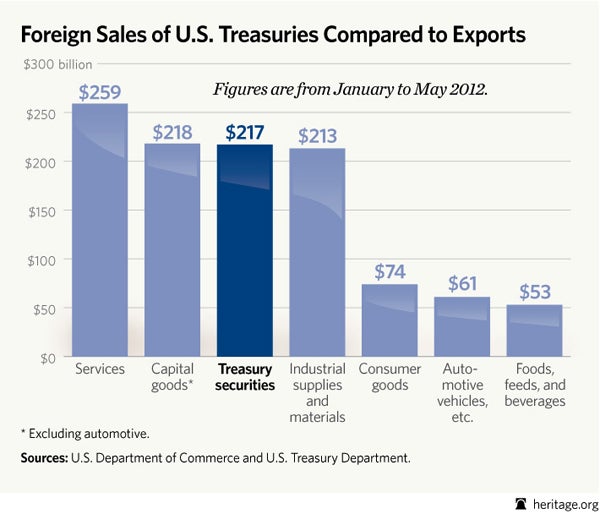
Sales of U.S. Treasury securities to foreigners are not counted as exports. But if they were, Treasury securities would be one of the country’s biggest exports.
The government sold $216.5 billion in treasury bonds to foreigners in the first five months of 2012. That’s four times more than the amount exported by U.S. agricultural producers and three-and-a-half times more than the amount exported by carmakers.
Sales of Treasury securities abroad have an impact on exporters, because when people in other countries buy U.S. government Treasury bonds, they have less money left to spend on U.S. private-sector goods and services.
That’s why if politicians are serious about boosting U.S. exports, their top priority should be to restrain excessive federal spending. This would reduce the budget deficit, resulting in fewer Treasury bond “exports” and more opportunities for U.S. private-sector producers to sell their goods and services abroad.