






















On Monday, The New York Times carried an op-ed by Heritage Foundation scholar and former US Attorney General Ed Meese titled “Stacking the Deck Against Proposition 8.” In that piece, Mr. Meese criticized a series of pre-trial rulings issued by Judge Vaughn R. Walker in the landmark same-sex marriage case currently underway in federal court in San Francisco. One of those rulings involved Judge Walker’s controversial decision to broadcast the trial to other courthouses and post video recordings of the Prop 8 trial on the Internet.
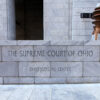
On Wednesday, the US Supreme Court issued an order affirming the view of many observers that Judge Walker had indeed attempted to stack the deck in this case. In its order, the Supreme Court issued a stay prohibiting Judge Walker from broadcasting the Prop 8 trial until the parties had time to file a more traditional appeal of his order.
The lawyers defending Prop 8 had argued that Judge Walker’s broadcast order violated federal law and was a bad idea. Those arguments have been discussed in a series of excellent and substantive posts by Ed Whelan to National Review’s Bench Memos blog. Even The Washington Post published an op-ed of sorts accusing Judge Walker of performing “legal pirouettes worthy of ‘Dancing with the Stars’ to ensure cameras in his courtroom for the same-sex marriage trial.” The author of that piece stated, “I think judges should be impeccably fair, adhere without agenda to the rule of law and be as transparent as possible, so that even those who disagree with their decisions may nevertheless respect those decisions. Judge Vaughn Walker, who is presiding over the gay marriage case, has failed on these counts.”
In its order issued yesterday, the Supreme Court did not mince words in explaining the error in Judge Walker’s broadcast order. “The District Court attempted to change its rules at the eleventh hour to treat this case differently than other trials in the district. Not only did it ignore the federal statute that establishes the procedures by which its rules may be amended, its express purpose was to broadcast a high-profile trial that would include witness testimony about a contentious issue. If courts are to require that others follow regular procedures, courts must do so as well.”
The Supreme Court explained how important it is for courts to be fair and neutral in deciding cases. “By insisting that courts comply with the law, parties vindicate not only the rights they assert but also the law’s own insistence on neutrality and fidelity to principle. Those systematic interests are all the more evident here, where the lack of a regular rule with proper standards to determine the guidelines for broadcasting could compromise the orderly, decorous, rational traditions that courts rely upon to ensure the integrity of their own judgments.”
The Supreme Court did not decide whether the Prop 8 trial should be broadcast at all. Instead, the Supreme Court merely ruled “that the broadcast in this case should be stayed because it appears the courts below did not follow the appropriate procedures set forth in federal law before changing their rules to allow such broadcasting.”
However, even if Judge Walker’s order had been lawfully issued, broadcasting the Prop 8 trial would still be an exercise in bad judgment. Expressions of support for Prop 8 have generated a range of reprisals including “harassment, intimidation, vandalism, racial scapegoating, blacklisting, loss of employment, economic hardships, angry protests, violence, at least one death threat, and gross expressions of anti-religious bigotry.” As others have recognized, broadcasting the Prop 8 trial could subject the parties, lawyers, and witnesses involved in defending Prop 8 to similar harms.
The Supreme Court’s stay order includes significant discussion of the reprisals directed against Prop 8 supporters and recognizes that some of witnesses testifying in support of Prop 8 “have already said that they will not testify if the trial is broadcast” and “have substantiated their concerns by citing incidents of past harassment.” These concerns will be a key aspect of any future arguments about the merits of broadcasting the Prop 8 trial to other courthouses and on the Internet.