

















On July 9, Costa Rican President Oscar Arias began a very difficult process of seeking to mediate a restoration of constitutional order in Honduras. It is a thorny challenge, given the sharp divisions between Mr. Manuel Zelaya, ex-President of Honduras, and the new reconstituted government, led by Robert Micheletti. The current incumbents in office feel very firmly that what they did on June 28th was an action aimed at protecting the Constitution, its system of checks and balances, and democracy against Mr. Zelaya’s illegalities. They also feel they took a major step in battling the rising tide of authoritarian-populism represented by Venezuela’s Hugo Chávez.
A critical body of U.S. congressional leadership has spoken effectively on issues of the legality of Mr. Zelaya’s removal from office. Their statements are must-viewing/-reading for anyone concerned about the Honduran crisis. Particularly valuable is Senator Jim DeMint’s interchange with the nominee for the chief Latin American position at the State Department on July 8.
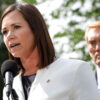
Equally essential is Senator Mel Martinez of Florida’s floor speech on Honduras on July 7.
The Administration continues to defend the view that what occurred in Honduras was a “coup,” plain and simple. It has backed Honduras’s expulsion from the OAS on 72 hours’ notice and is examining cutting off assistance to one of the Hemisphere’s poorest countries, just as Hugo Chavez shuts off the oil spigot. Likewise, the Administration has not yet responded to serious questions about possible drug-related corruption by Mr. Zelaya.
The Administration also refuses to meet with former senior Honduran officials, including ex-President Maduro and a delegation of elected deputies from the Honduran congress, a meeting many in Congress recommend. These voices need to be heard it the U.S. is to understand what is required to restore constitutional order in Honduras. Simply going along with the OAS consensus will not do!
It is not taking into account the massive outpouring of public sentiment demonstrated by the people of Honduras who do not want Zelaya back.
From the standpoint of what Americans believe is right for nations and for democracy, it remains difficult to align with anti-democratic leaders (from the communist Castro brothers to populist authoritarians like Venezuela’s Hugo Chavez) and still say one places the defense of democracy as the highest priority in the Western Hemisphere.
For the moment, attention regarding Honduras is diverted to Costa Rica. But in the days ahead, the Obama Administration must play an active, balanced, and constructive role in keeping Honduras and much of Central America from falling into the abyss of demagoguery, disappointment, and despair. The Administration cannot run with an increasingly anti-democratic pack and still expect to be considered a leader and a beacon for those resisting the renewed assault of the anti-democratic, anti-American Left in Latin America.