

















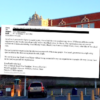






That’s according to a recent Gallup Poll:
While most people have supported nuclear power in recent years – usually in the mid-50 percent range – the poll found 59 percent now favor its use. And the number of people who say they strongly favor nuclear – usually around 20 percent – has soared to 27 percent.”
This is clearly good news but there’s work to be done. Although the majority supports nuclear energy in the United States and believe it is safe, a considerable percentage of people, 42 percent, still believe nuclear plants are not safe. Part of the reason may be organizations like Greenpeace use pictures (here and here) of rabbits with four ears and elephants with two trunks as scare tactics. (H/T: Nuclear Energy Institute)
It’s evident education still needs to play a large role in the nuclear debate. The Heritage Foundation has a paper titled, “Dispelling the Myths of Nuclear Energy”, which debunks the fallacies environmental activists purport in their attempt to squelch nuclear power development in the U.S. One of the myths, which would allegedly lead to animal deformities, is the amount of radiation exposure one receives from a nuclear power plant.
Well, the reality is less than 1 percent of the public’s exposure to radiation comes from nuclear power plants. The average American is exposed to 360 millirem of radiation a year. About 83 percent (300 millirem) of this annual radiation dose comes from natural sources, such as cosmic rays, uranium in the Earth’s crust, and radon gas in the atmosphere. Most of the rest comes from medical procedures such as X-rays, and about 3 percent (11 millirem) comes from consumer products.
The Department of Energy reports that living near a nuclear power plant exposes a person to 1 millirem of radiation a year. By comparison, an airline passenger who flies from New York to Los Angeles receives 2.5 millirem. Radiation exposure is an unavoidable reality of everyday life, and radiation exposure from living near a nuclear power plant is insignificant. The full paper can be found here.
The Nuclear Energy Institute’s safety and security page also contains very good information on plant operations, preparedness, personnel training, among other things.