Reporting on the latest incarnation of the Wall Street Bailout, The New York Times managed to discover the concept of moral hazard today: As the Treasury Department prepares a $40 billion program to help delinquent homeowners avoid foreclosure, it confronts a difficult challenge: not making the plan too tempting to people like Todd Lawrence. An airline pilot who lives outside Norwich, Conn., Mr. Lawrence has a traditional 30-year mortgage that he has no trouble paying every month. But, thanks to the plunging real estate market, he owes more on his …
Midnight Regulations? If ‘Midnight’ Means December 2006 – Shopfloor.org The Washington Post publishes today as its lead, page one story, “A Last Push to Deregulate” with a subhed, “White House to Ease Many Rules.”… Global Warming: No Kumbaya, Yet – InsiderOnline Global warming was supposed to be such a dire problem that we would all be able to set aside our differences and figure out a solution. It’s not working out that way. Governments are still behaving like governments. According to the Financial Times, China has now set a price …
Perhaps the oddest reaction to the financial meltdown and looming recession comes from environmental activists and bureaucrats who see it as a rationale to transform the economy along green lines. They argue that the old brown economy has shown itself to have reached the point where it no longer generates wealth, and that it is time for a paradigm shift towards an environmentally sustainable economy. For a description of this agenda, check out the UN’s Global Green New Deal. To listen to them, the economic problems have little to do …
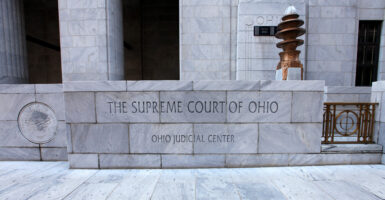
It must really be tough to be a public affairs guy at the Department of Justice who has to explain why the Civil Rights Division is not carrying out its enforcement responsibilities. I have posted previously about the failure of the Civil Rights Division to enforce the Help America Vote Act against Ohio Secretary of State Jennifer Brunner, who has refused to forward information about mismatches between the information contained on new voter registration forms and other state records to county election officials (they have also failed to sue the …
Congress is expected to vote on a stimulus package after the election. This package may include various spending increases including funding for infrastructure, and bailouts for states facing budget shortfalls. Unfortunately, proposals made thus far are emblematic of a failed approach. Increased spending, whether it is in the form of direct spending, or disguised welfare through the income tax system, is ineffective economic stimulus. True economic stimulus requires a pro-growth tax and energy policy. Sadly, many in Congressional leadership have failed to realize this…Until now. On Tuesday, House Republican Leader …