












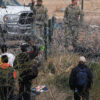












At the Presidential debate Friday in Oxford, Mississippi, John McCain emphasized “how tough that terrain is” on the Pakistan Afghan border, and that “we have to get the cooperation of the people in those areas.” An incident last week underscored how right he was on both counts. On Thursday two U.S. helicopters supporting a U.S.-Afghan ground patrol inside Afghanistan’s Khost Province were fired upon by Pakistani forces who believed they had crossed into Pakistan airspace. Navy Adm. Mike Mullen, chairman of the U.S. Joint Chiefs of Staff, said he was comfortable Pakistani troops had not been told to shoot at American forces. Nevertheless, the incident underscores the sensitive nature of the situation in the region.
Heritage analyst Lisa Curtis comments:
The U.S. may need to continue to rely on unilateral military action in the tribal areas to protect its troops fighting across the border in Afghanistan as well as to prevent a potential future catastrophic international terrorist attack. But the U.S. must carefully calibrate its military action, recognizing that each unilateral strike—especially if it involves civilian casualties—undermines U.S. broader goals of garnering cooperation from Pakistani leaders and preventing the strengthening of radical forces within Pakistani society.
…
Incoming commander of U.S. Central Command General David Petraeus said yesterday that a comprehensive approach was needed to quell the war in Afghanistan, including reconciliation with the population and “absolute engagement” with Pakistan.
…
Initiatives such as the establishment of Reconstruction Opportunity Zones (ROZs) in the border regions of Pakistan and Afghanistan can also help defuse regional tensions. ROZ legislation now before the U.S. Congress has been supported jointly by Pakistani Ambassador to the U.S. Husain Haqqani and Afghan Ambassador to the U.S. Said T. Jawad. The two leaders have called for expeditious passage of this legislation that would create industrial zones to produce and export textiles and other items to the U.S. duty-free. Most importantly, they argue, the establishment of ROZs in these regions would draw the Afghan and Pakistani economies closer together, increasing their cooperation and integration. Initiatives like ROZs will give each country a vested interest in the stability of the other and help defuse conflict that fuels support for radical ideologies and terrorism.